
Palau
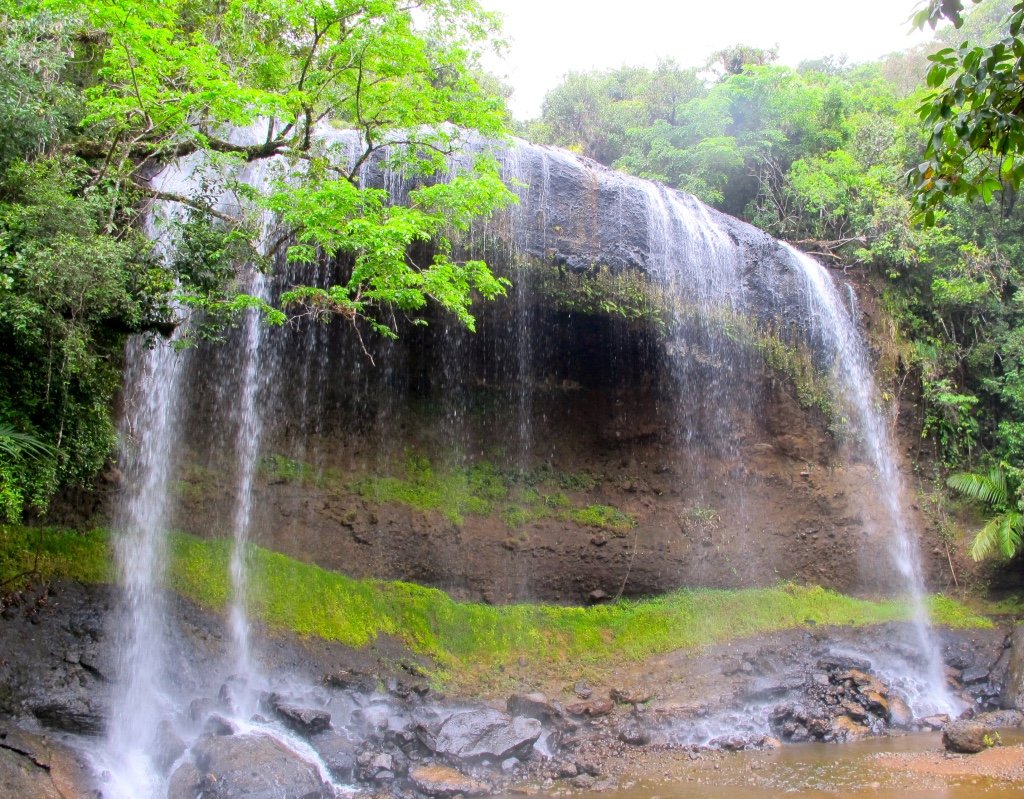
People frequently ask me what my favorite dive destination is. The answer is Palau — and it’s really not even close. Palau has something for everyone: big animals like sharks and manta rays, dramatic wall dives, picturesque coral gardens, heart-pounding drift dives, caves and caverns, a dozen WWII wrecks, macro critters and muck diving, and some of the most spectacular topside scenery anywhere in the world. The only thing Palau is missing is a kelp forest.
I was incredibly fortunate to spend a season working as a scuba instructor and dive guide at Sam’s Tours in 2011–2012, logging around 450 dives there. The diving never got old. There’s a lot that makes Palau special, so I’ll break it down by section.
Background: Palau
Palau is a small island nation on the western edge of Micronesia. The country is home to about 20,000 people, making it the third- or fourth-smallest nation on Earth (depending on how one feels about Vatican City). However, at roughly 180 square miles, spread across 340 islands with a maximum elevation of about 800 feet, it’s actually quite large by Micronesian standards.
Most of Palau’s population lives on the main islands of Koror, Babeldaob, and Peleliu. Babeldaob is the largest island and home to the capital city of Melekeok, but due to quirks of history and geography, Koror is the true population and commercial center. Koror is where you’ll find nearly all of Palau’s land-based dive operations, hotels, and restaurants. These two main islands are connected by a bridge and are surrounded by a massive barrier reef and a large inner lagoon.
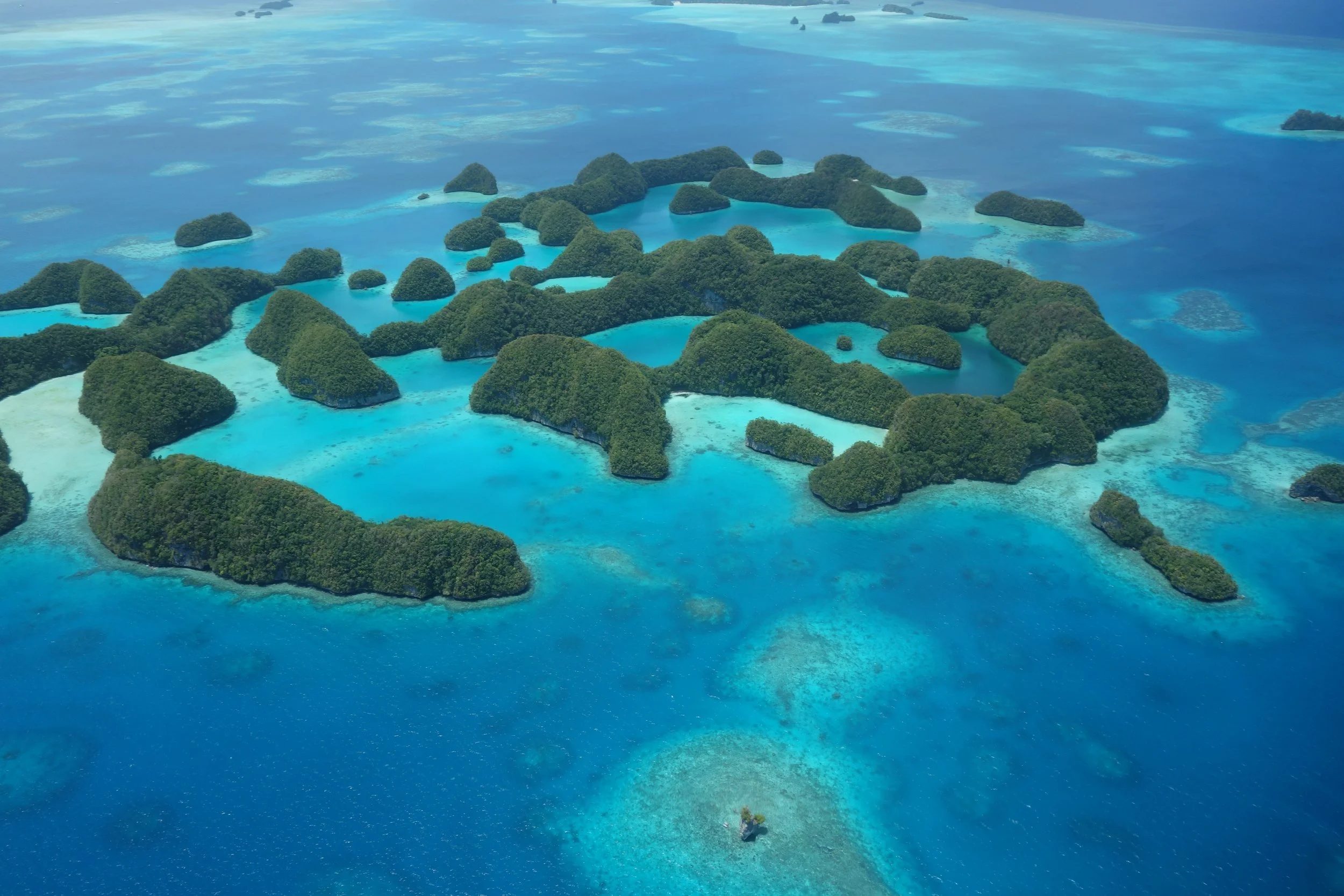
The lagoon is home to the world-famous Rock Islands — uninhabited limestone islands that look like a field of floating, palm-covered mushrooms. These islands create an incredible backdrop on boat rides to and from dive sites, and they form a well-protected anchorage that was heavily used by the Japanese Navy during WWII. The lagoon also contains shallow patch reefs, shipwrecks, caverns, and the world-famous Jellyfish Lake. However, Palau’s most iconic dive sites lie along the outer barrier reef, about an hour to an hour and a half by boat from Koror.
Environment
Palau is essentially a giant seamount, formed as coral grew around an extinct volcano. It is remarkably isolated — the nearest landmass is the Philippines, more than 550 miles away — and the surrounding seafloor plunges to depths over 26,000 feet. This makes Palau a true oasis in the middle of a vast oceanic desert.
Palauans take great pride in their country’s natural beauty and resources. In 2009, Palau established the world’s first national shark sanctuary, protecting 230,000 square miles of ocean. In 2012, the Rock Islands became a UNESCO World Heritage Site, and in 2020, the Palau National Marine Sanctuary was created, banning fishing in over 80% of the country’s waters.
Conservation efforts extend to diving as well: all major sites have mooring buoys to prevent anchor damage, and a permit system regulates access to sensitive areas like Jellyfish Lake.
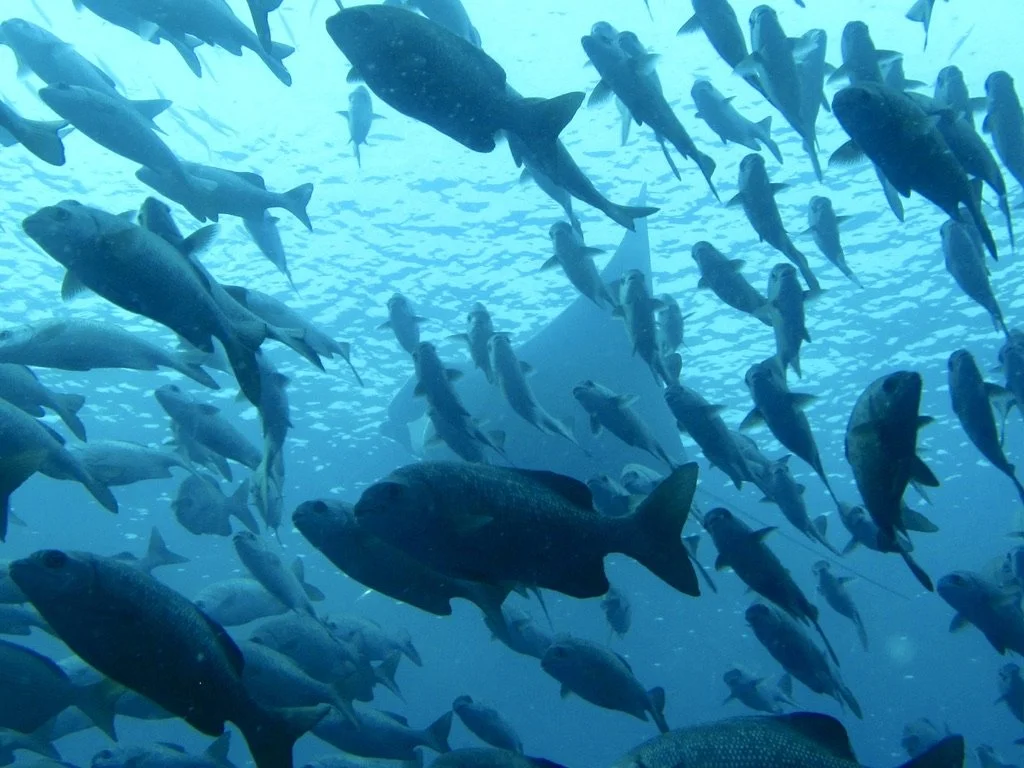
The effects of these efforts are immediately visible. The reefs are healthy and vibrant, with abundant coral and fish life. Large schools of pelagic species such as jacks, trevally, barracuda, and snapper are common, while gray reef and white-tip sharks are almost guaranteed sightings. Manta rays visit cleaning stations and feeding grounds, and during certain moon phases, divers can witness massive spawning aggregations of bumphead parrotfish, groupers, and snappers. On rare occasions, visitors may even encounter marlin, mahi-mahi, or leopard sharks.
Palau also offers excellent macro life for those willing to look closely — leaf scorpionfish, emperor shrimp, nudibranchs, and anemonefish are all common. Deeper sites like Siaes Tunnel are home to Helfrich’s filefish, while Sam’s Tours dock shelters friendly mandarin fish.
The Diving
There are no bad dives in Palau. Conditions vary dramatically depending on tides, moon phase, and season. Some sites are best on incoming tides, others on outgoing. Peak season runs from November to April, when manta activity is high and west-side conditions are best.
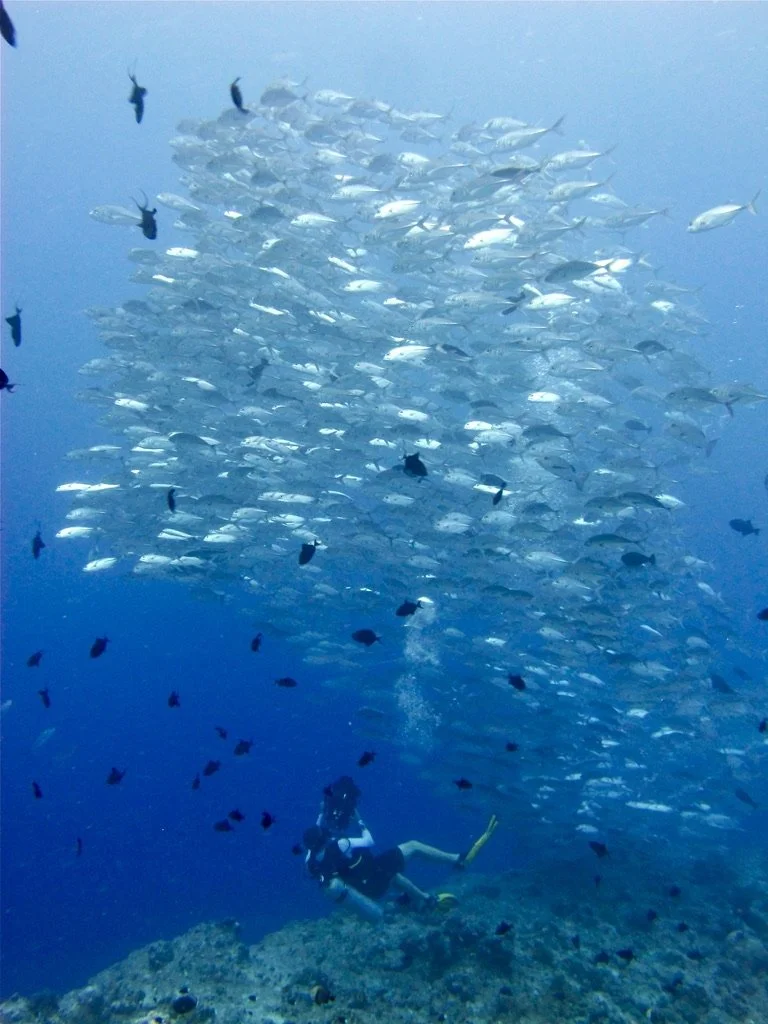
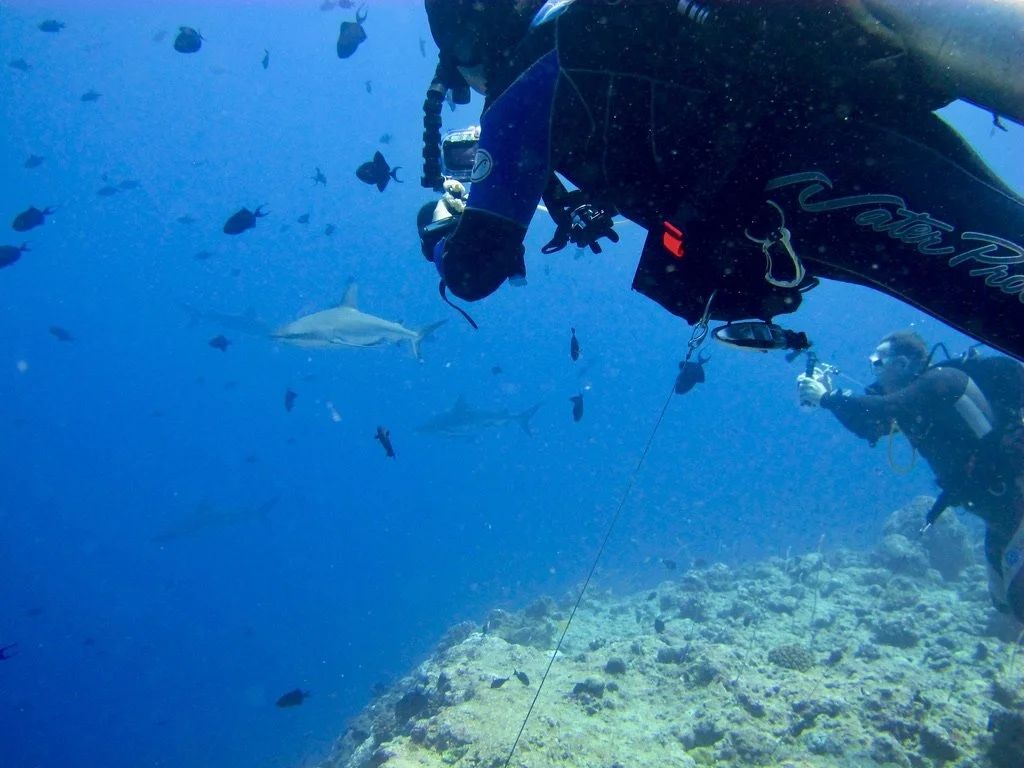
Most dives are drift or wall dives. Guides check the current before entry, and divers descend along walls that start as shallow as 10–15 feet and drop thousands of feet into the blue. At “corners,” where the wall changes direction sharply, currents converge and attract large pelagic life. The most famous of these is Blue Corner, often considered one of the best dives in the world. Divers use reef hooks to secure themselves while watching sharks, napoleon wrasse, and huge schools of fish drift past. Other notable corner sites include Siaes Corner, New Drop-Off, and Peleliu Express.
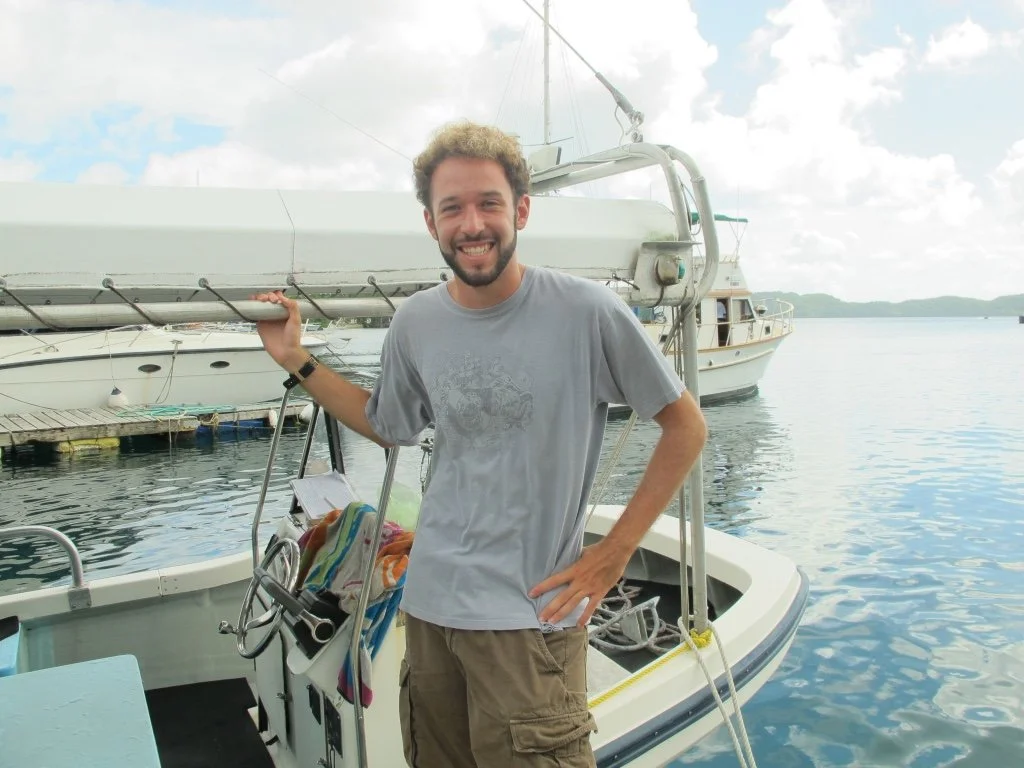
Me in my scuba instructor days, it took 4 months for my hair to go blonde

History
Palau has been inhabited for at least 2,000 years and had a thriving culture long before the first Europeans — Spanish sailors and Jesuits — arrived in the late 17th century. In 1783, a British ship, the Antelope, was wrecked off Ulong Island. The high chief of Koror helped the survivors rebuild their ship, and his son, Lee Boo, later traveled with them to London, becoming one of the first Pacific Islanders to visit Europe.
This contact led to greater outside interest. Palau was initially claimed by Spain but was sold to Germany in 1898 following Spain’s defeat in the Spanish-American War. Germany controlled Palau for 20 years, and many early Palauan artifacts can still be found in Berlin. During World War I, the islands were seized by the Imperial Japanese Navy and remained under Japanese control for the next three decades. Japan heavily developed the islands, building infrastructure, naval and seaplane bases, and engaging in mining, fishing, and agriculture.
During WWII, Palau served as a major naval base and was the site of the Battle of Peleliu, one of the bloodiest battles of the Pacific War. After Japan’s defeat, Palau became a U.S. Trust Territory and eventually gained independence in 1994. Today, Palau and the U.S. maintain a close relationship under a Compact of Free Association, allowing Palauans to travel and work in the U.S. without a visa, serve in the U.S. military, and even share a U.S. ZIP code.
The Channels
The barrier reef surrounding Palau encloses an immense lagoon, punctuated by several natural and man-made channels that cut through the reef. The two most famous are German Channel and Ulong Channel.
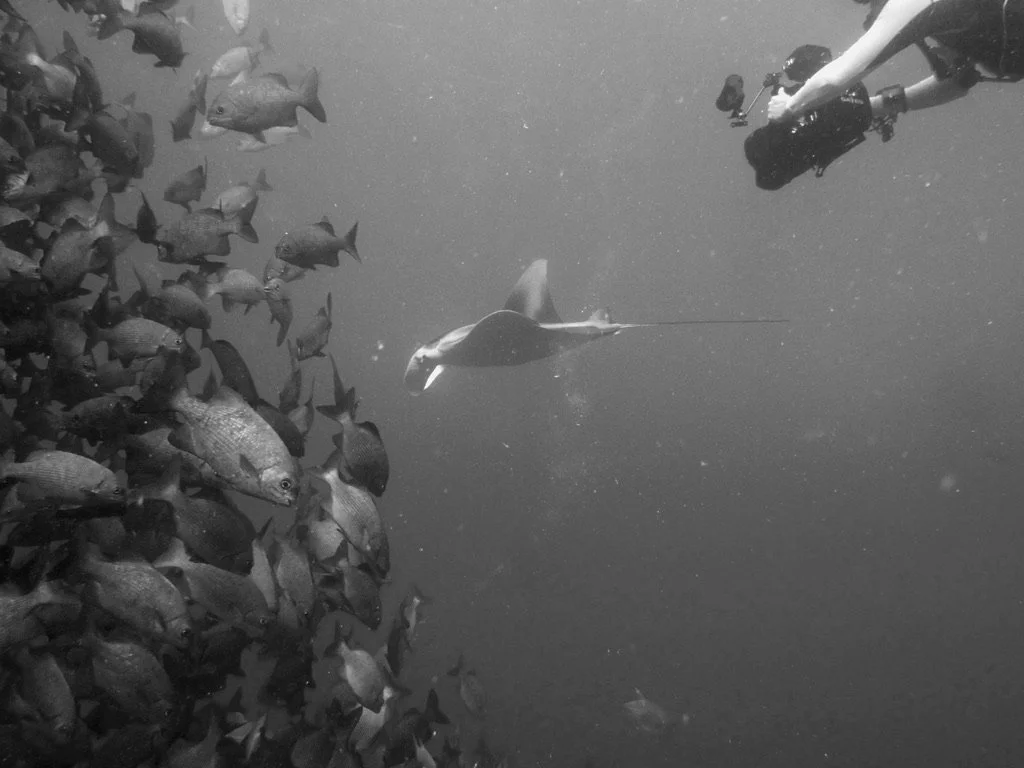
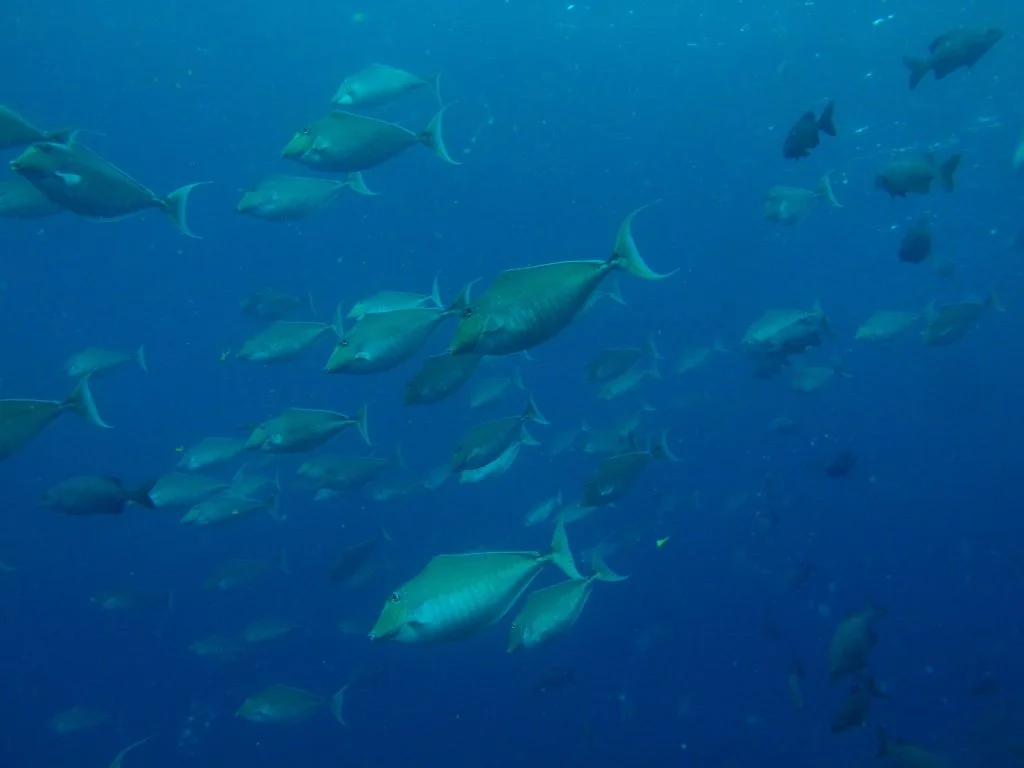
German Channel was blasted through the reef during the German colonial period to allow cargo ships easier access to the lagoon. Today it’s the best site in Palau for seeing manta rays, which gather to feed on plankton and visit cleaning stations along the channel reef. Conditions can vary, and finding mantas sometimes takes patience — but even without them, German Channel offers sightings of leopard sharks, stingrays, and other plankton feeding fish like the Unicornfish.
Ulong Channel, near Ulong Island, is a natural cut in the reef and one of the world’s best drift dives. On a strong incoming tide, divers fly through a coral canyon lined with massive lettuce corals, giant clams, and schools of fish, while sharks patrol the entrance.
The Caves
Palau’s limestone geology creates ideal conditions for cave formation. Many stunning caverns exist both above and below the waterline. The most famous is the Blue Holes, a massive, cathedral-like chamber illuminated by four openings in the reef ceiling and connecting to the wall between 50 and 130 feet. Other notable sites include Siaes Tunnel, Virgin Blue Hole, and Turtle Cove — all great places to spot macro life amid breathtaking light.
Inside the Lagoon is Chandelier Cave, a 400 ft long cave with an entrance about 5 minutes from the Sam’s Tour dock. The cave leads to four air chambers richly decorated with stalactites.
Palau & WWII
The wrecks of Palau tend to be treated as an afterthought, and are often missed entirely by divers who tend to skip Palau and go to Truk if they are interested in wrecks. However Palau played a major roll in the Pacific war, and the US naval attacks on Palau in March of 1944 sank dozens of freighters, oil tankers, support ships, and patrol boats.
In September of 1944, the US Marines invaded the island of Peleliu, at the southern end of the Palau Rock Islands. The goal was to secure the airfield at Peleliu in support of the upcoming invasion of the Philippines. The US Naval planners believed it would take just 4 days to secure the 6 square mile island.
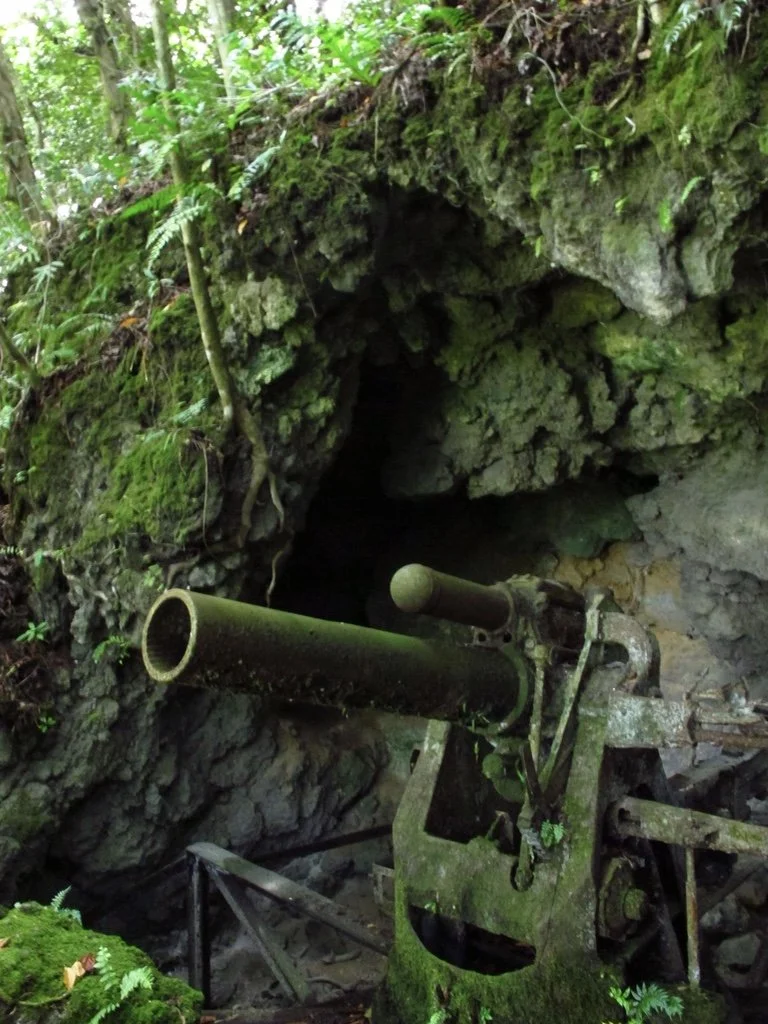
This was a mistake. From the air and sea Peleliu looks like a lush and green tropical paradise. When you step foot on the island you realize that beneath the tropical foliage is a jagged and rocky maze of uplifted coral and limestone. The same limestone caves and canyons that make for such interesting diving below sea level were turned into a death trap by the 12,000 entrenched Japanese defenders, who managed to hide pill boxes, mortars, artillery throughout Peleliu.
In the end the Japanese would defend the island for nearly 3 months. The US military would suffer over 10,000 casualties in the fight for Peleliu, with over 2,000 dead. The fighting would concentrate along the north side of the Island at a spot known as “Bloody Nose Ridge”, and the Marine’s landing on the island would suffer the highest casualty rate of the entire pacific war.
The Wrecks
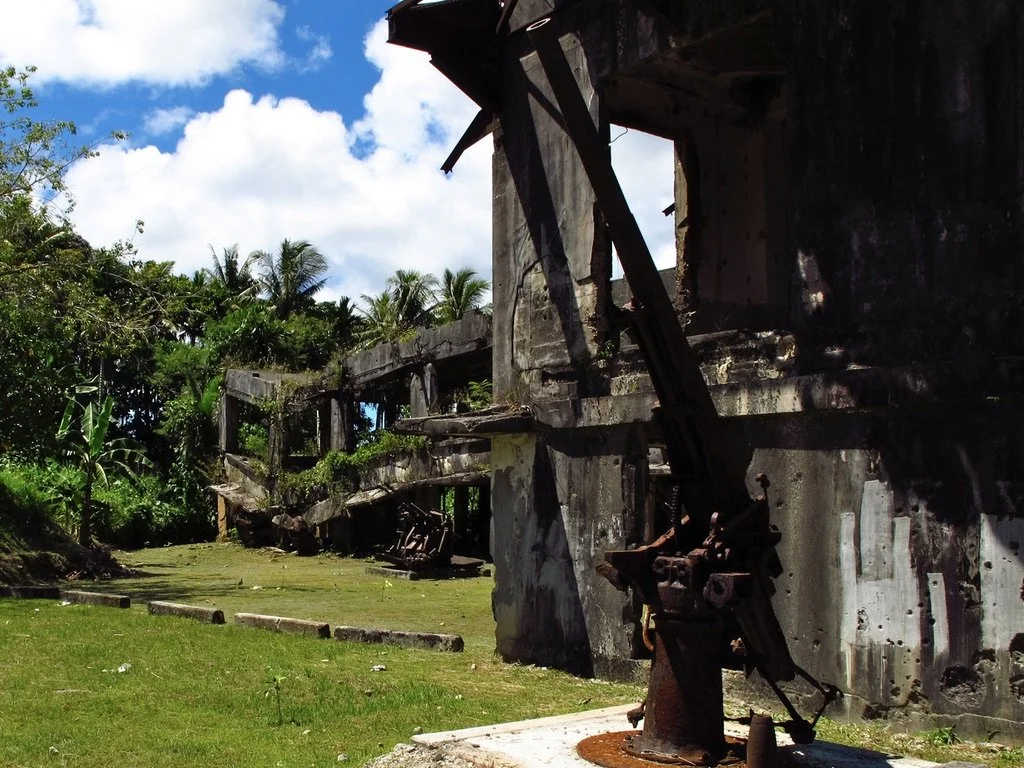
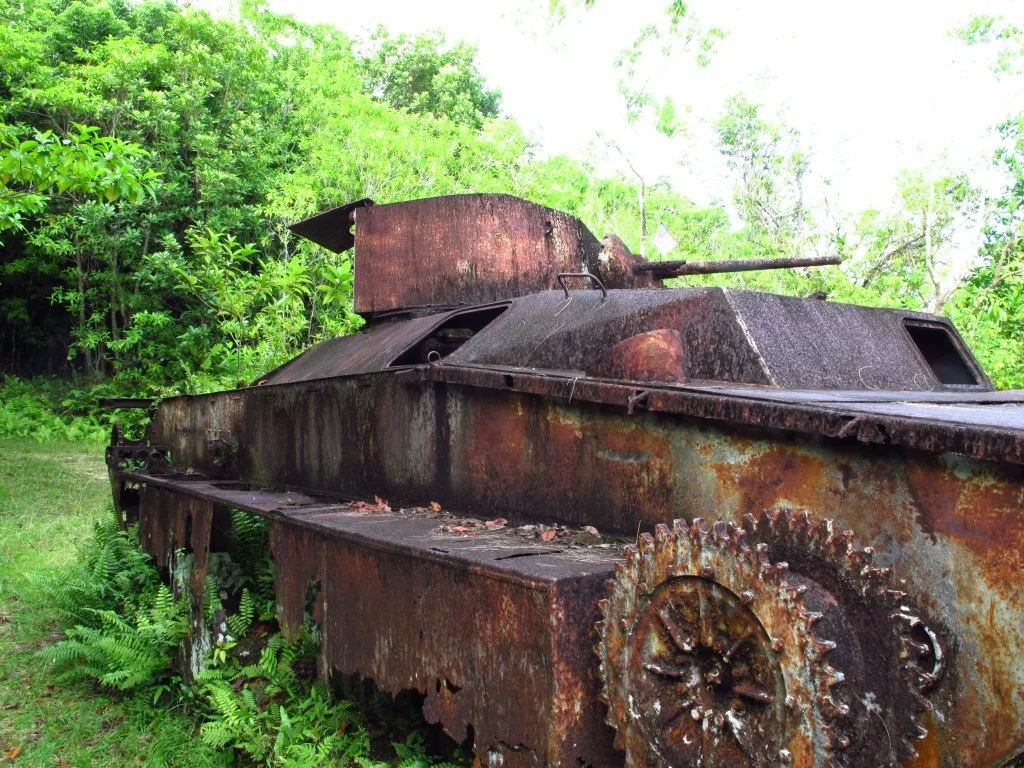
WWII remnants are scattered across Palau. Burned-out tanks, bunkers, and aircraft wrecks remain on land, especially on Peleliu. Underwater, more than 30 ships were sunk, though postwar salvaging companies removed or damaged many of the wrecks.
Still, several massive tankers — the Iro, Sata, and Amatsu Maru — remain and are well worth diving. The Iro is especially famous for its bow and stern guns and towering masts. Other interesting wrecks include the Bichu Maru, Teshio Maru, Chuyo Maru, and Ryuku Maru. The Helmet Wreck, near Koror, was somehow missed by the post war salvage operations and is the most intact and artifact-rich of the Palau wrecks. It is still filled with it’s cargo of army helmets and enough depth charges to blow up half of Koror harbor (which is one reason some dive guides approach it with caution).
Visibility on these wrecks is typically 20–40 feet, which is fantastic visibility for a NY diver like myself, but does leave some people underwhelmed.
Jellyfish Lake
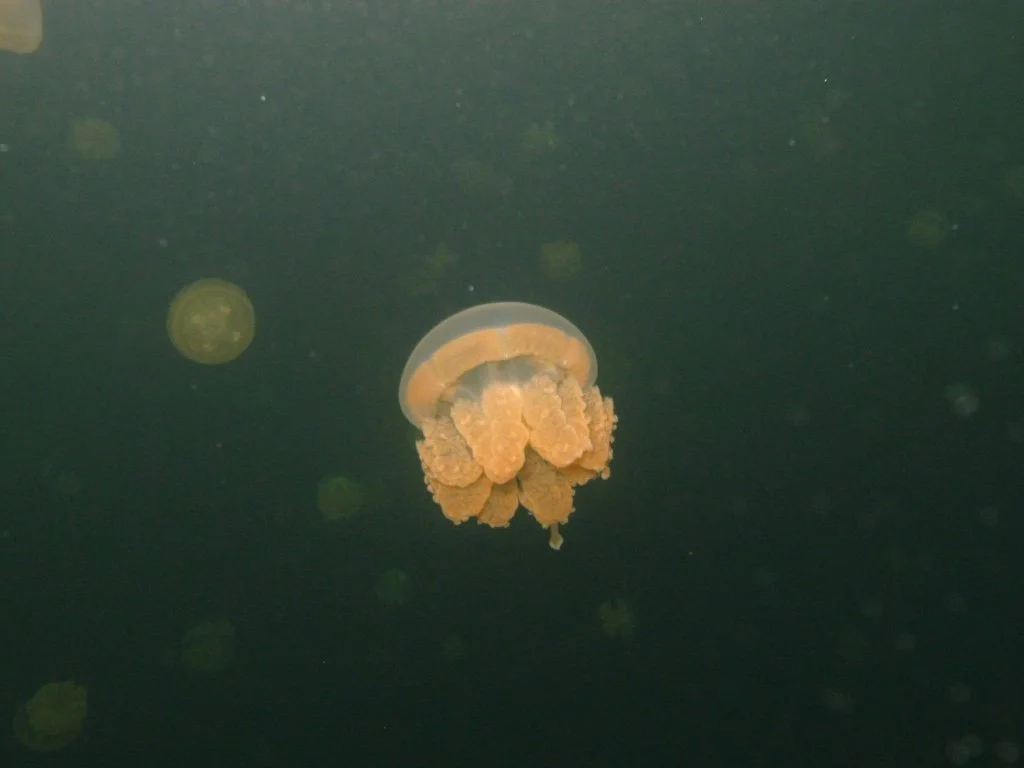
No trip to Palau is complete without visiting Jellyfish Lake. Thousands of years ago, rising sea levels trapped jellyfish in a marine lake within the Rock Islands. Over time, the golden jellyfish evolved into a stingless subspecies that survives through a symbiotic relationship with zooxanthellae, an algae living in their tissues. Each day, the jellyfish migrate across the lake following the path of the sun.
Diving is not permitted in the lake, but it’s a fantastic snorkel experience. The lake is about a 15-minute hike from the dock and is often visited on the way back to Koror after a day of outer-reef diving.
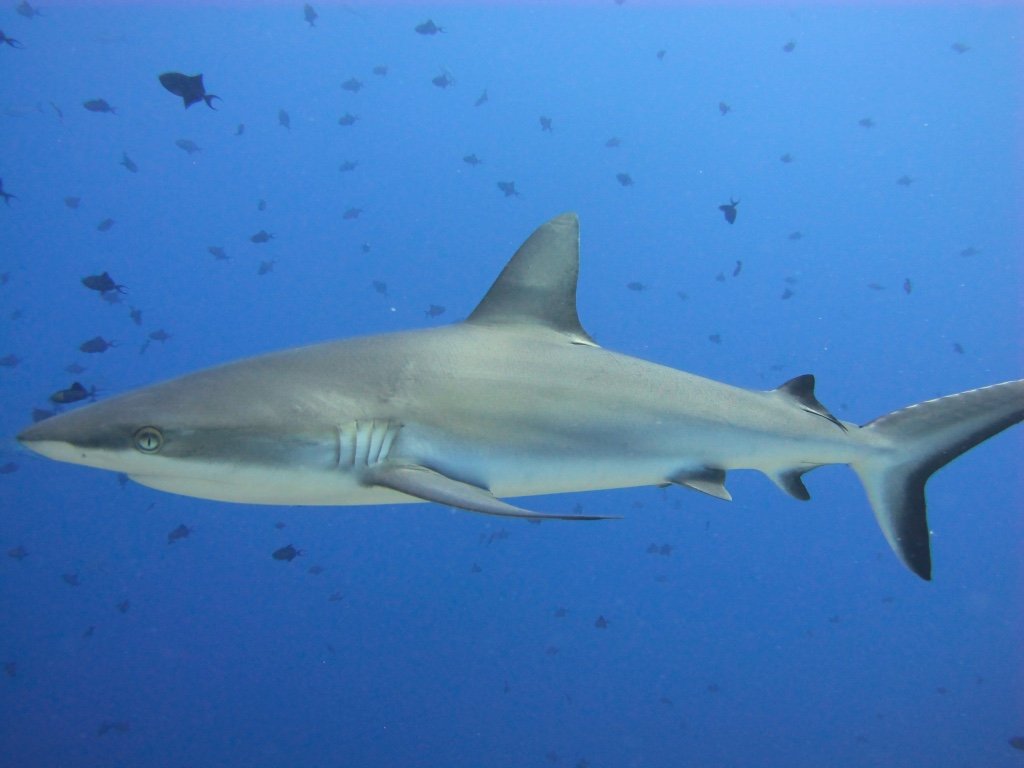
Reef Shark Cruising by Blue Corner
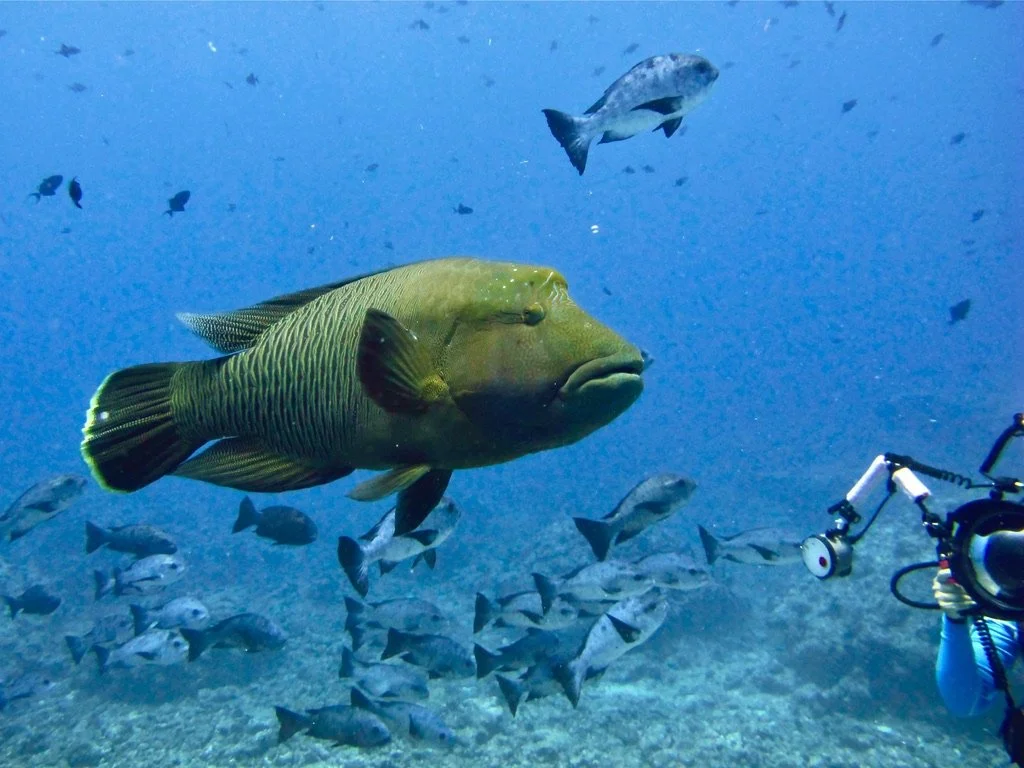
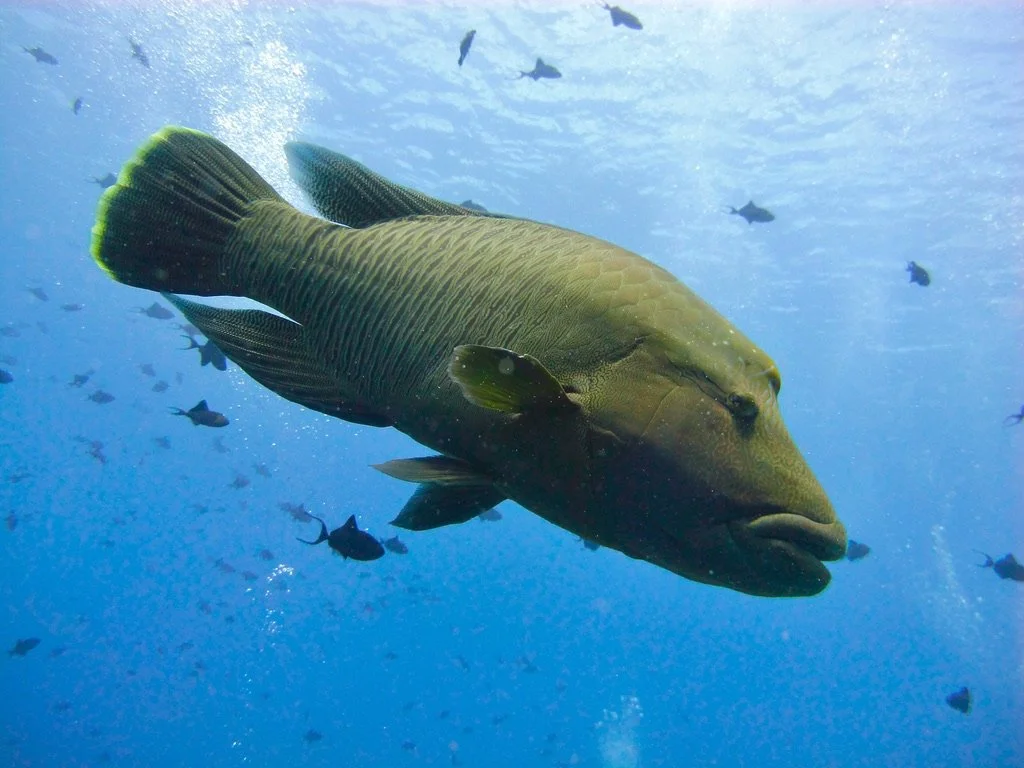
Napoleon Wrasse at Blue Corner
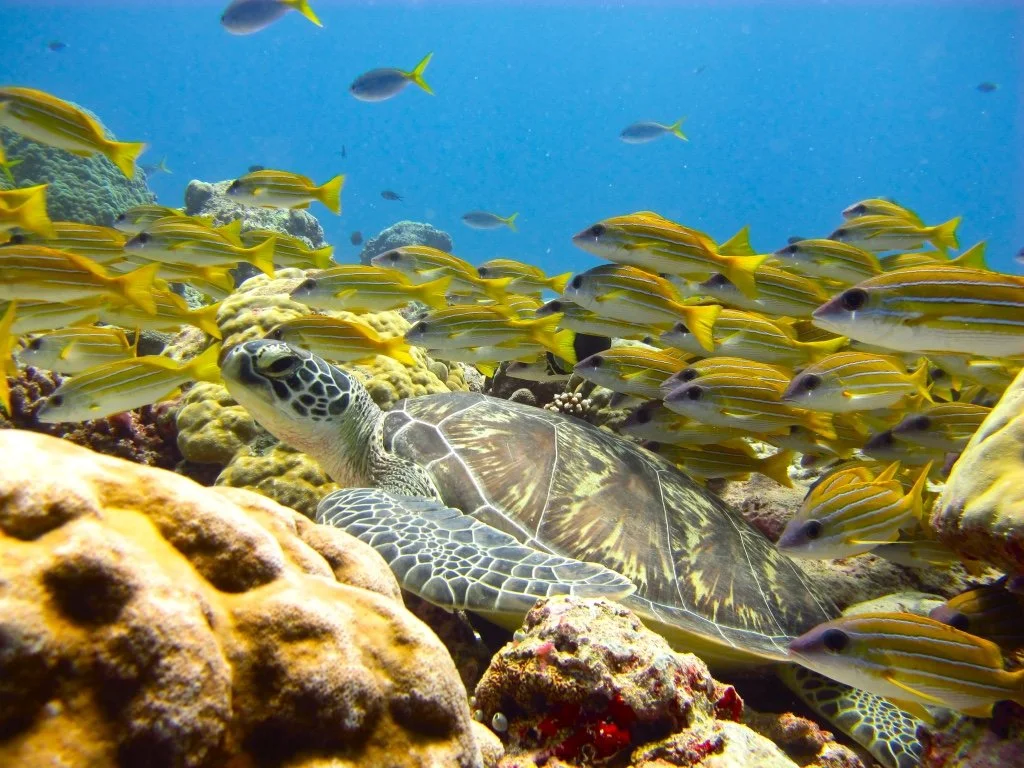
Sea Turtle resting at New Drop Off
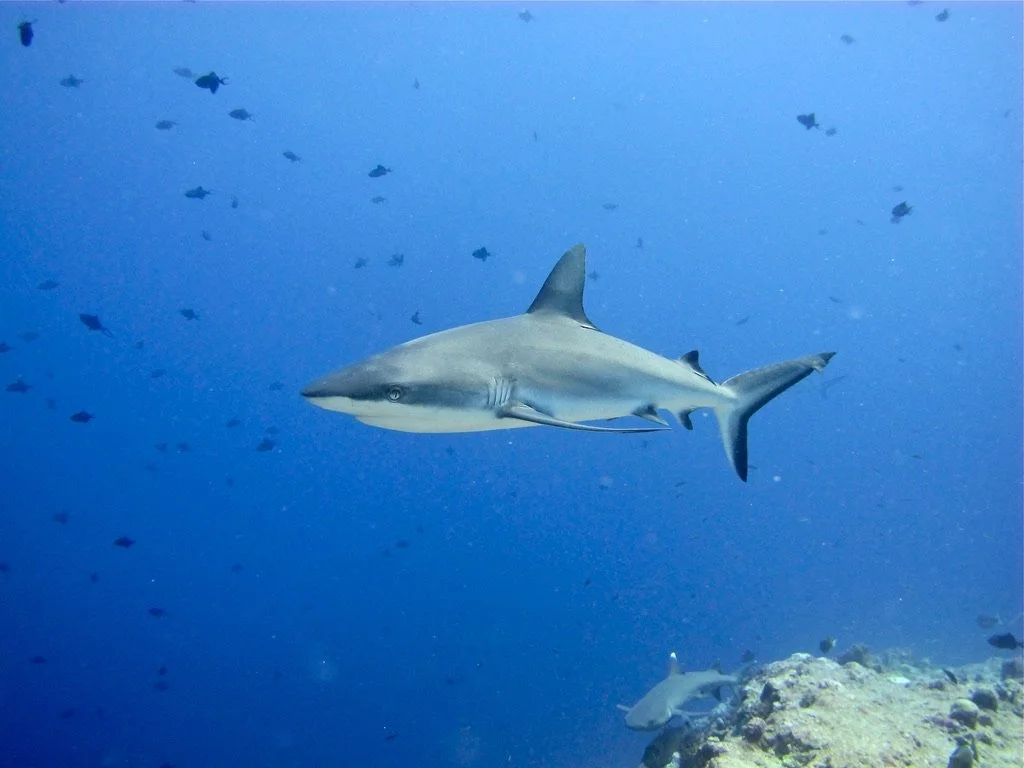
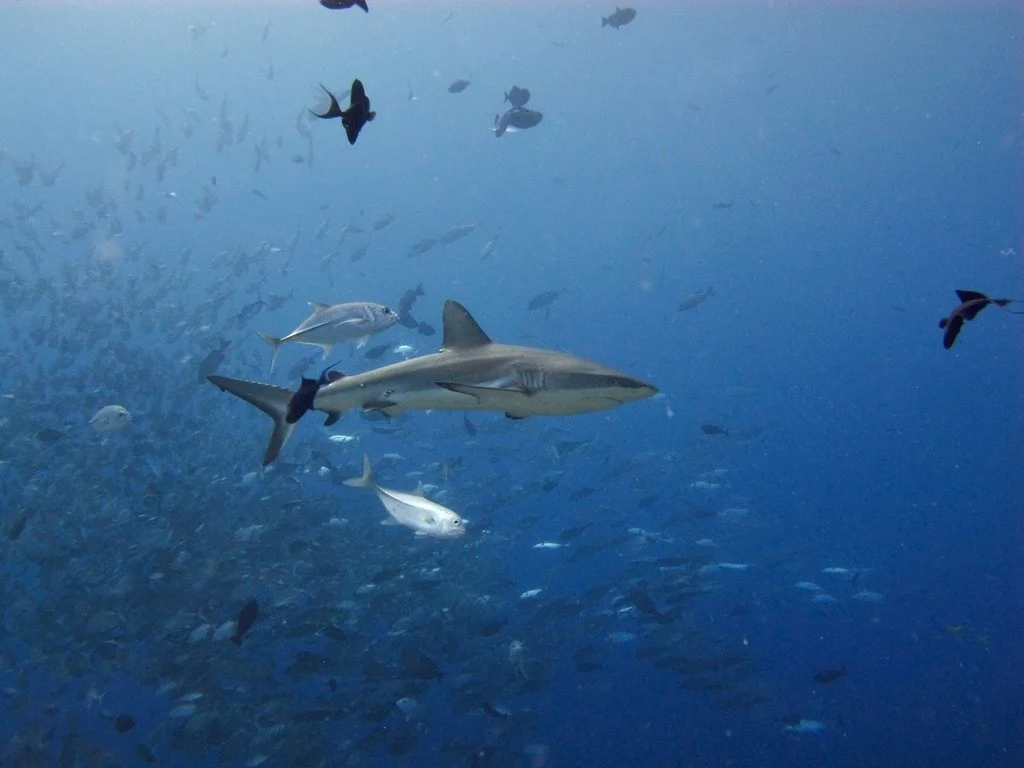
It's rare to dive Palau and not see at least a half dozen reef sharks
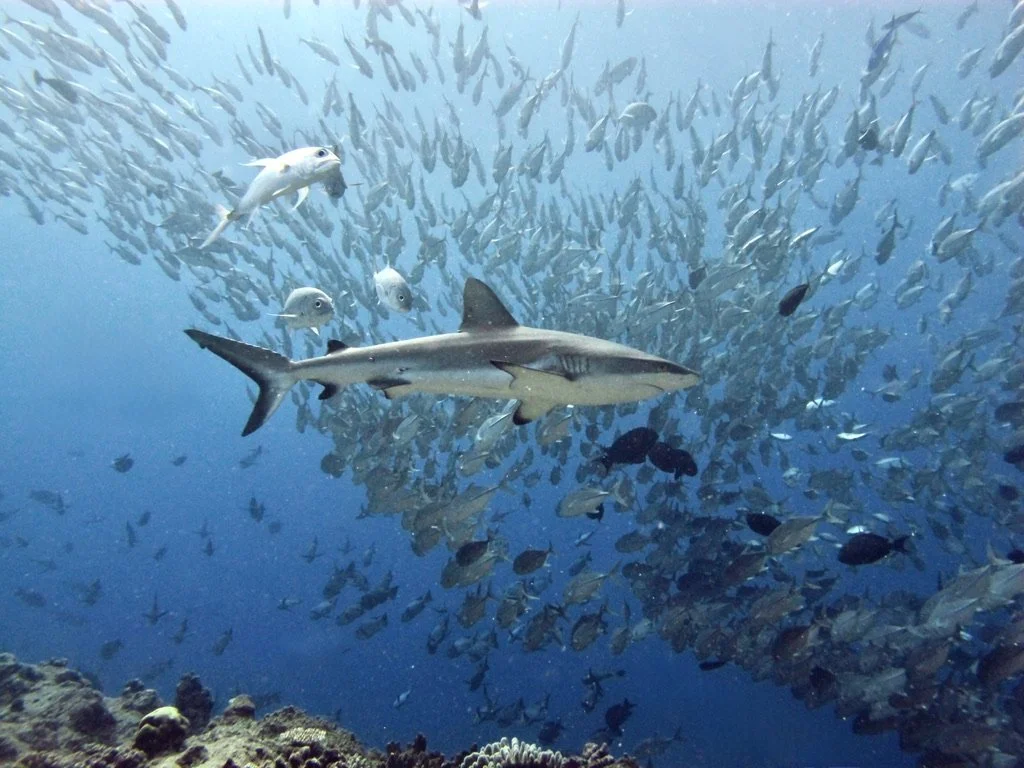
Reef Shark being followed by Trevally, while swimming past a school of black snapper
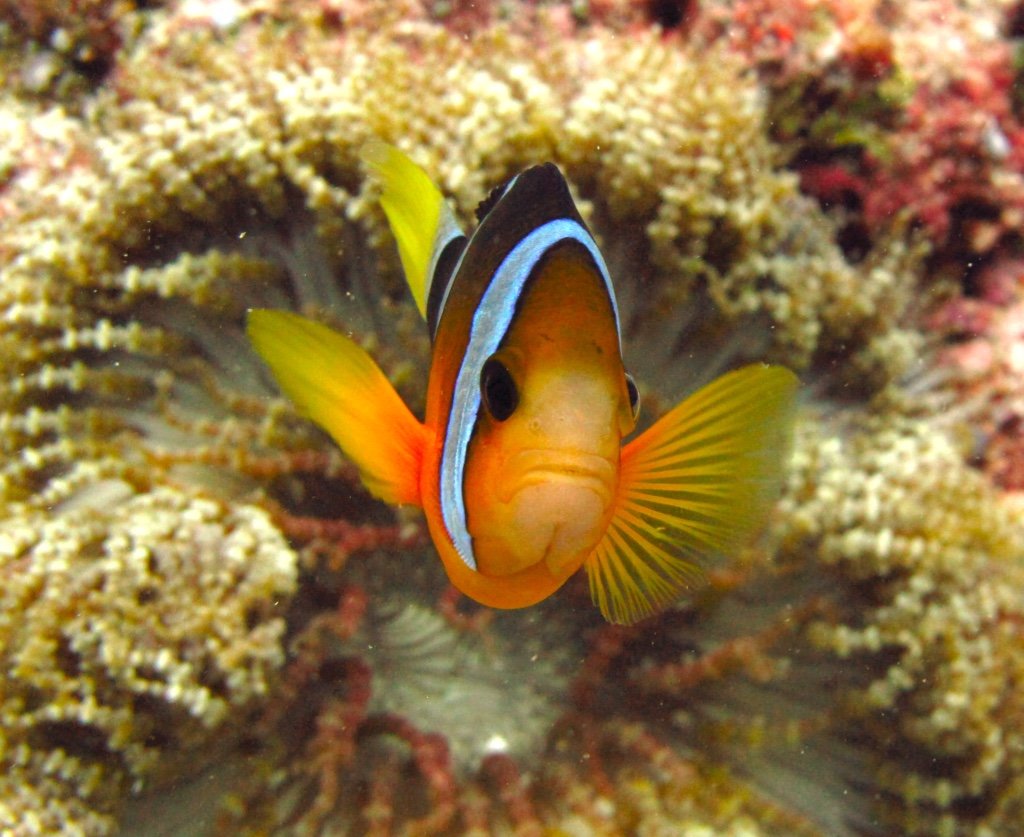
Clownfish
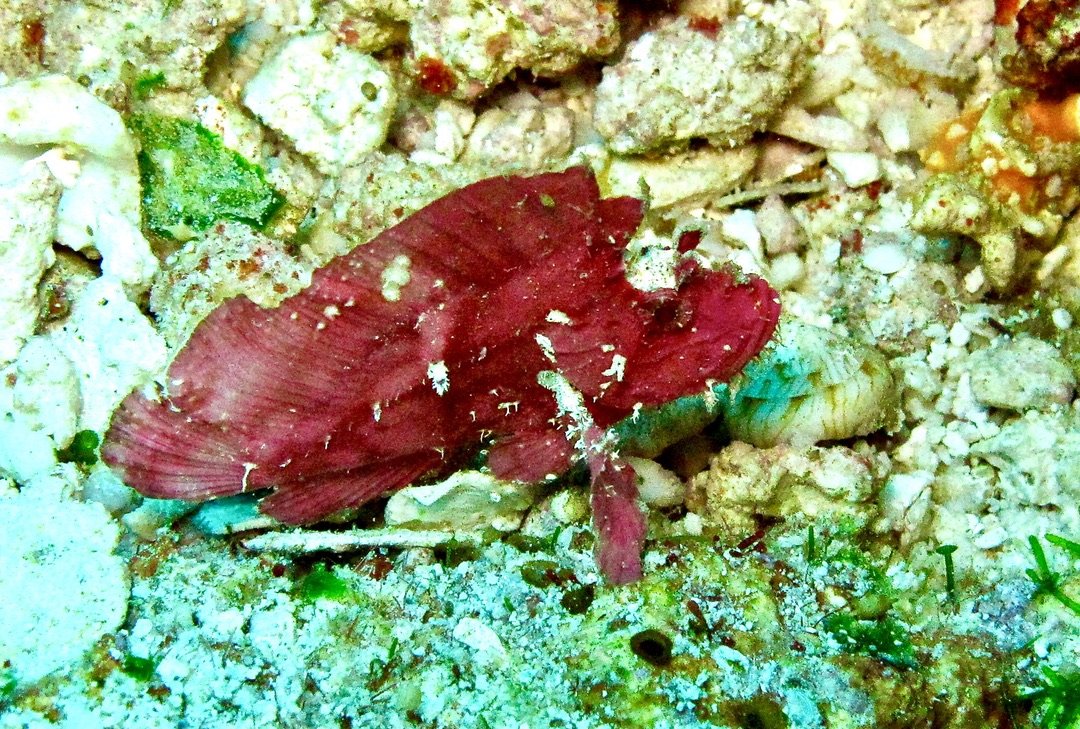
Leaf Scorpionfish at Siaes Corner
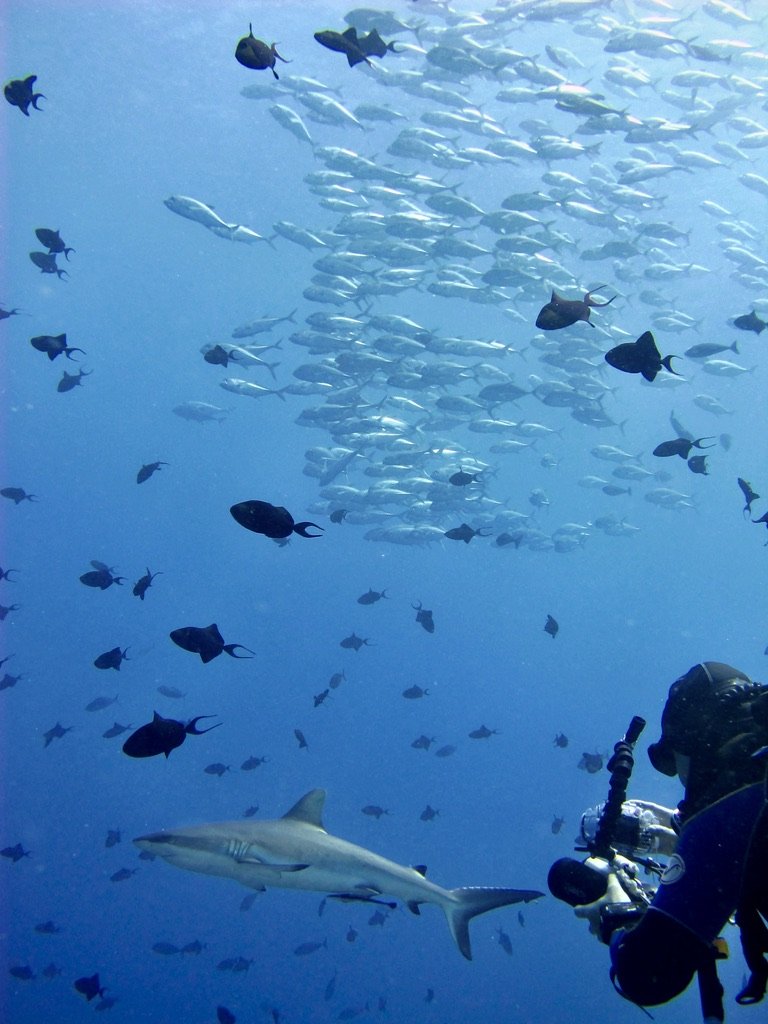
Schools of fish are everywhere at Blue Corner
Manta Feeding in the distance at German Channel
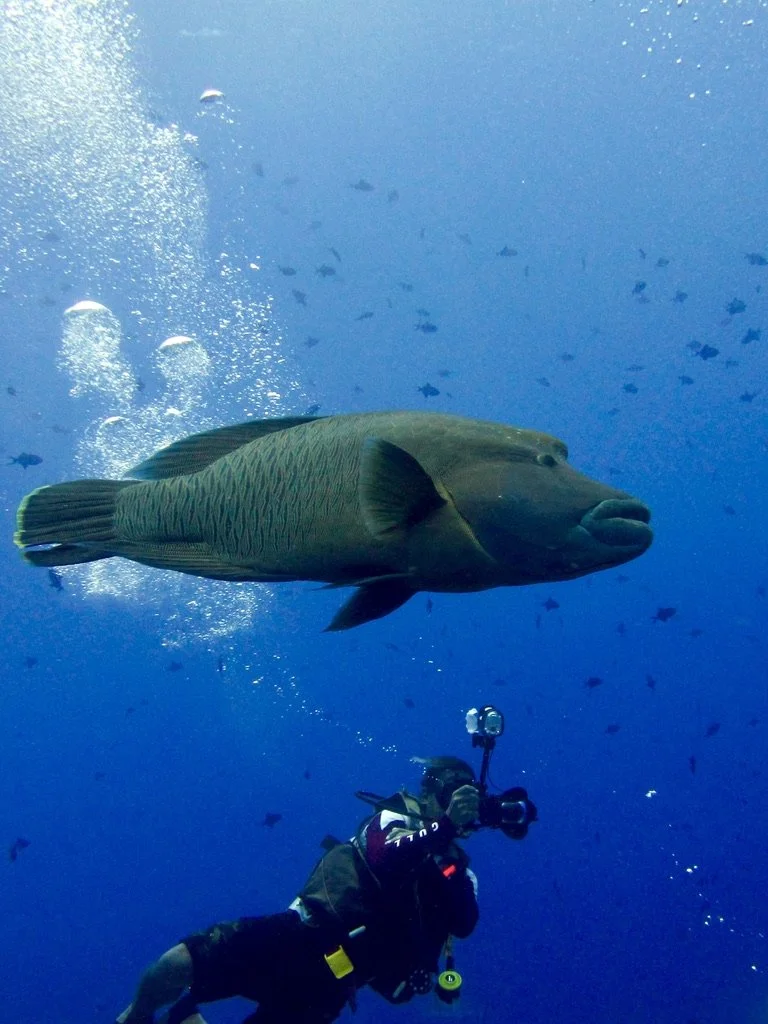
Napoleon Wrasse
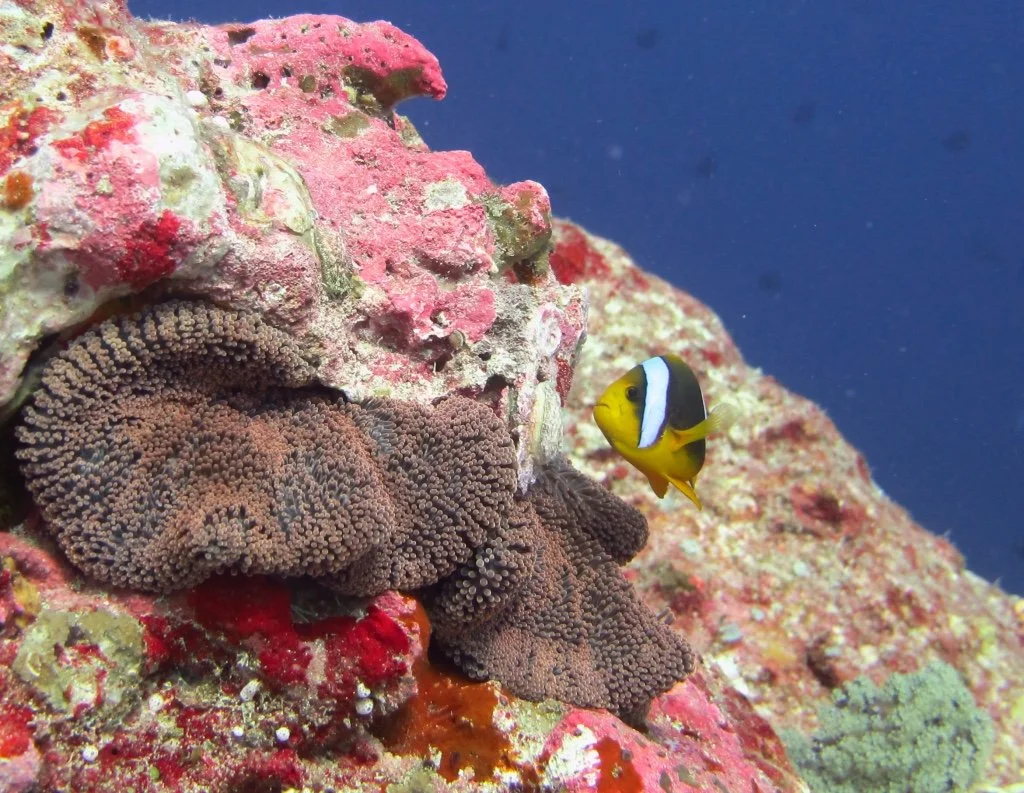
Clownfish and Anemone on one of Palau's wall dives
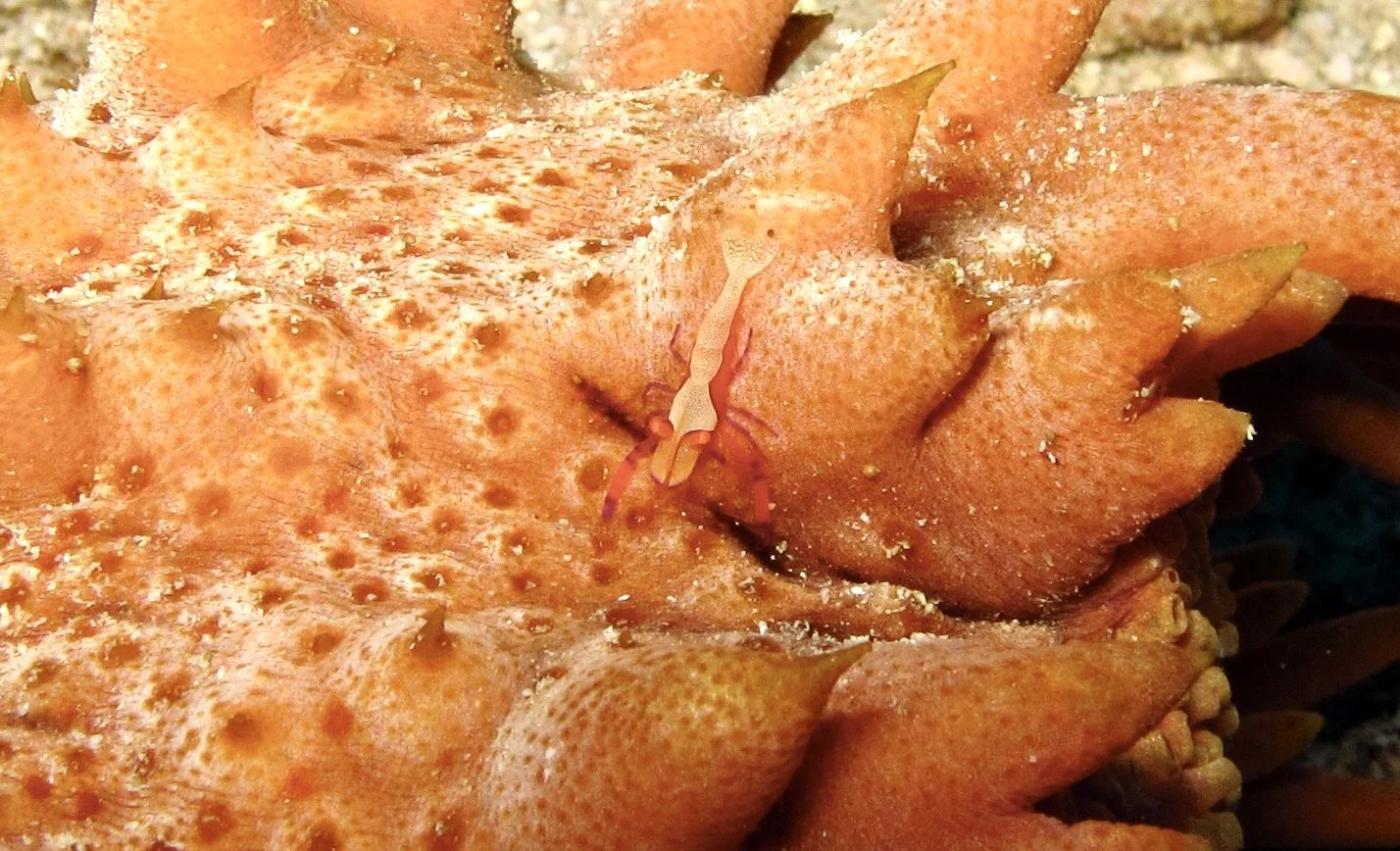
If you can peel your eyes away from the Sharks and Manta's you can find cool macro critters, like this Emperor Shrimp
School of Jacks at Blue Corner
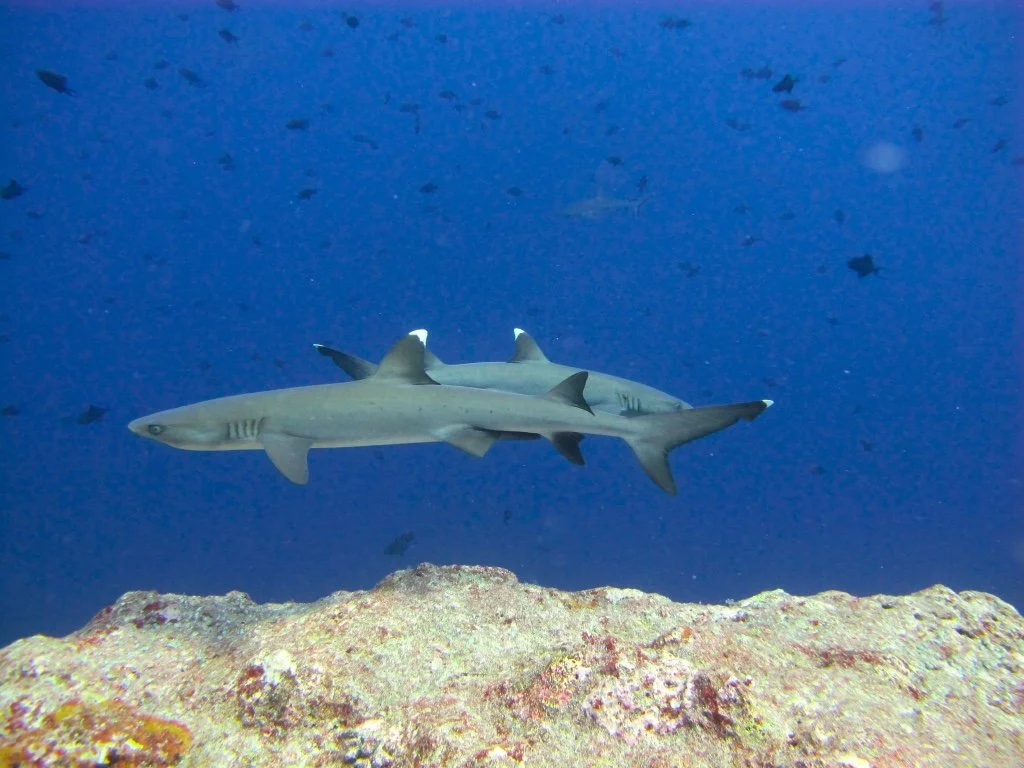
White Tip Reef sharks swimming by
These Jacks were actually swimming up too, and rubbing against the Grey Reef Shark. I believe they were using the shark's rough skin to clean off parasites.
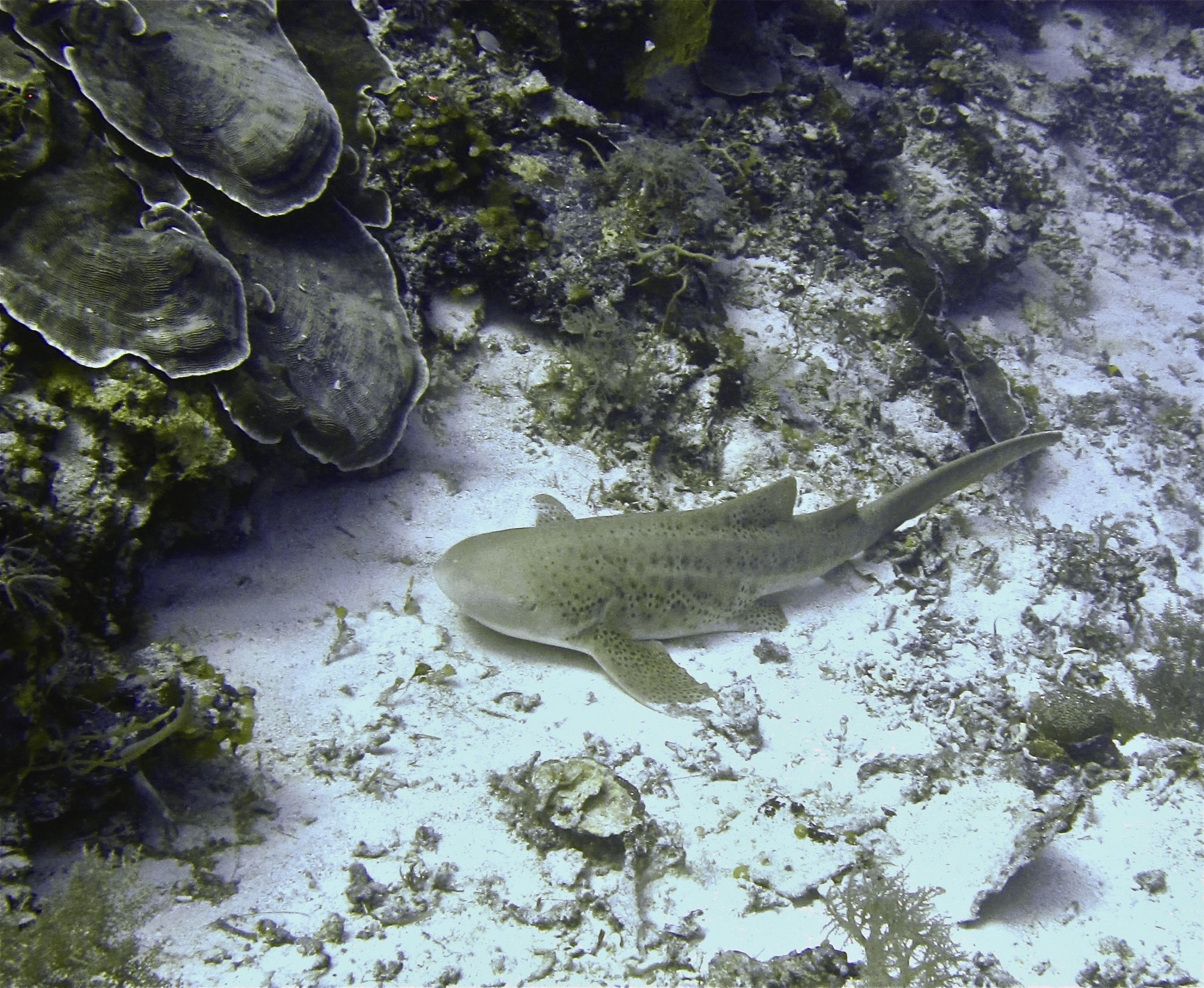
Zebra of Leopard Shark resting at the bottom in German Channel
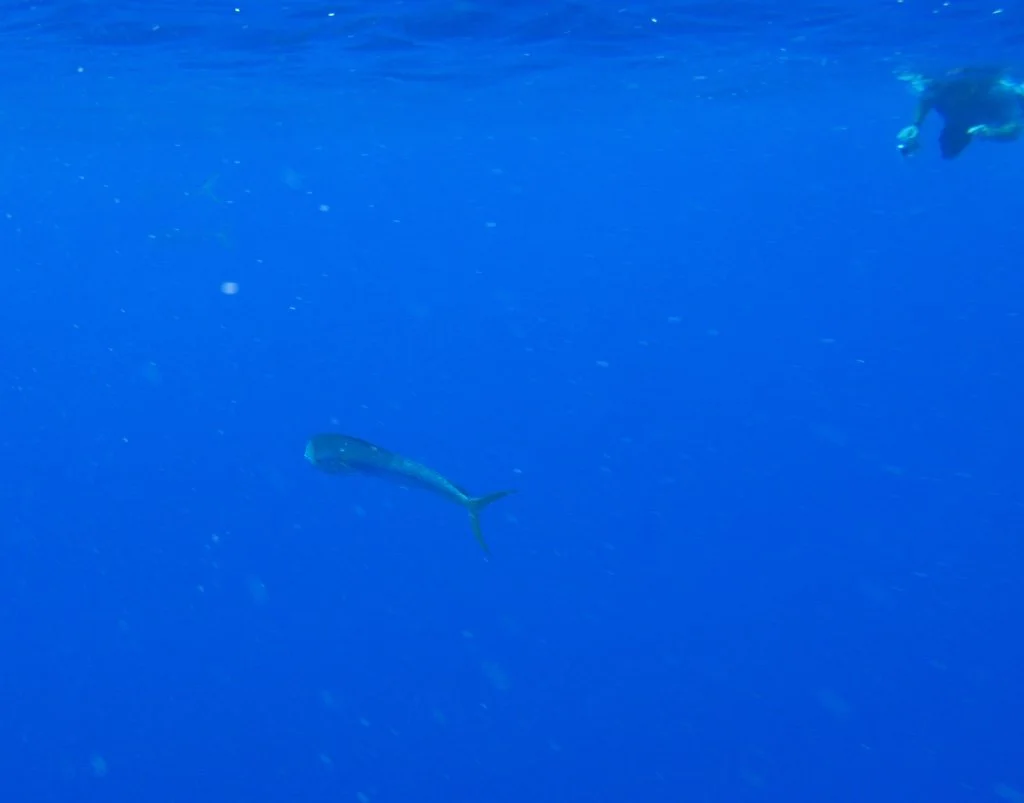
Mahi swimming in the blue
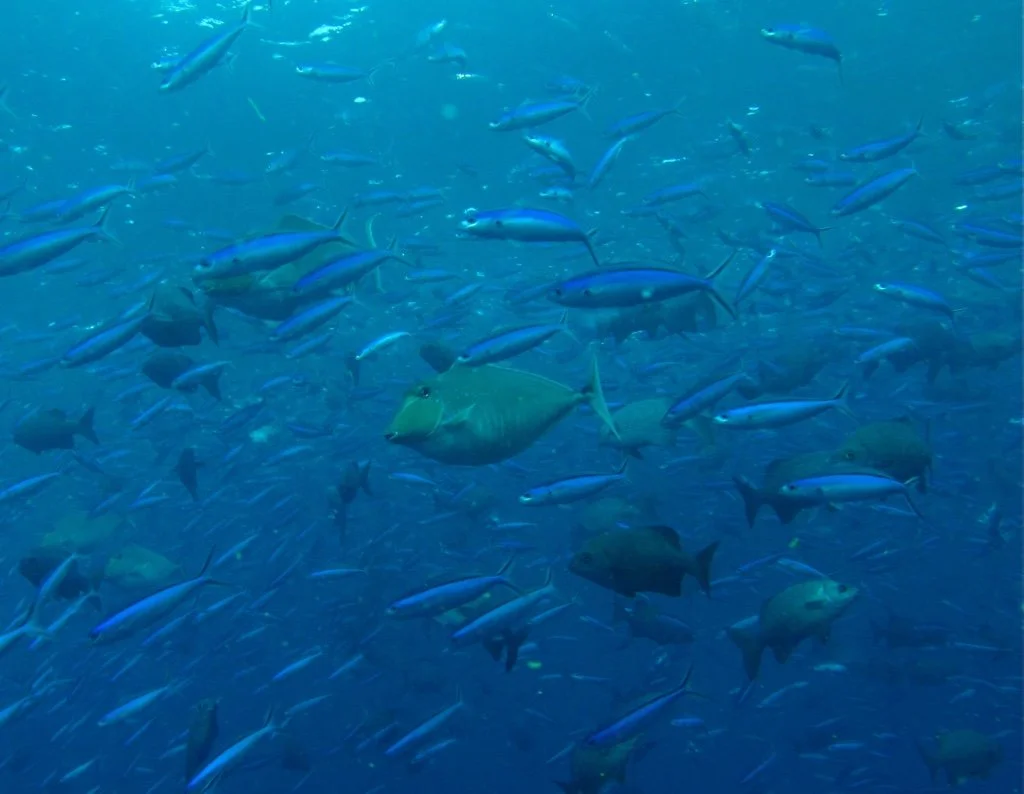
A school of Unicornfish and fusiliers in German Channel
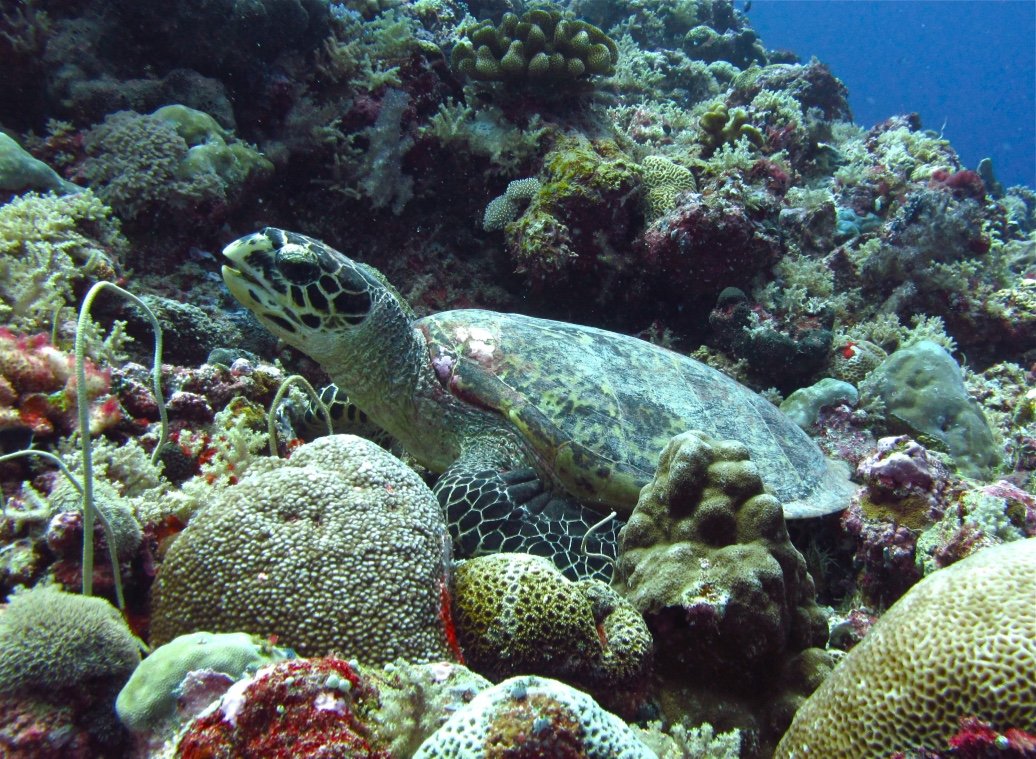
Turtles can be found on most Palau dive sites
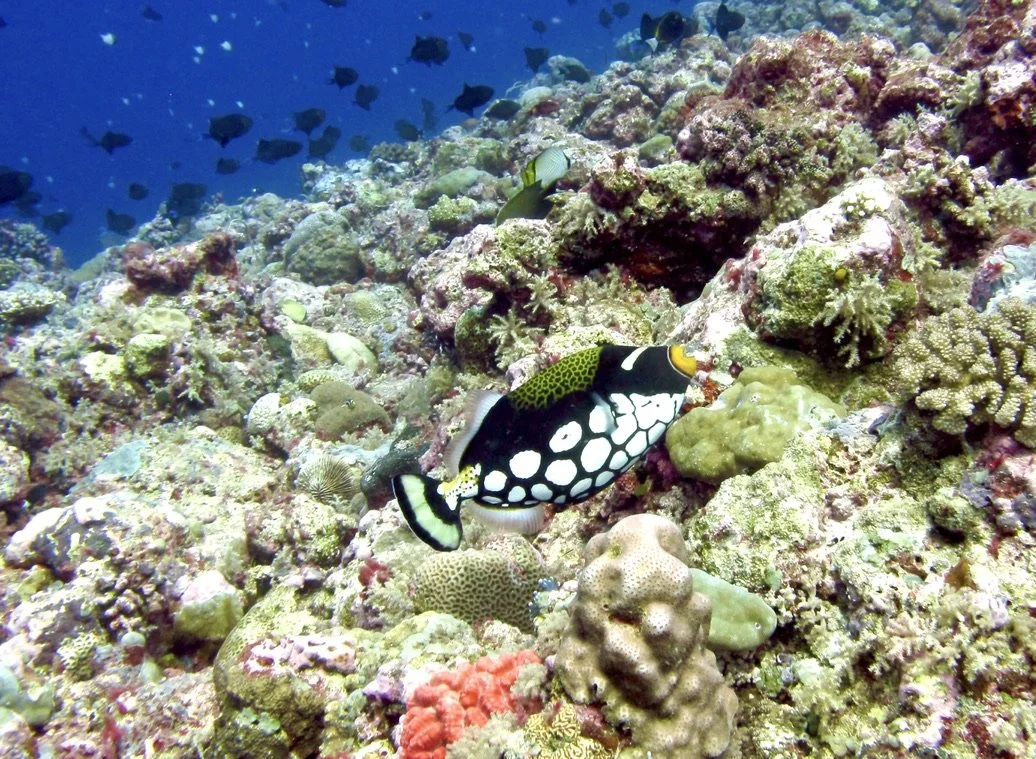
Picasso Triggerfish swimming along the top of one of Palau's wall dives
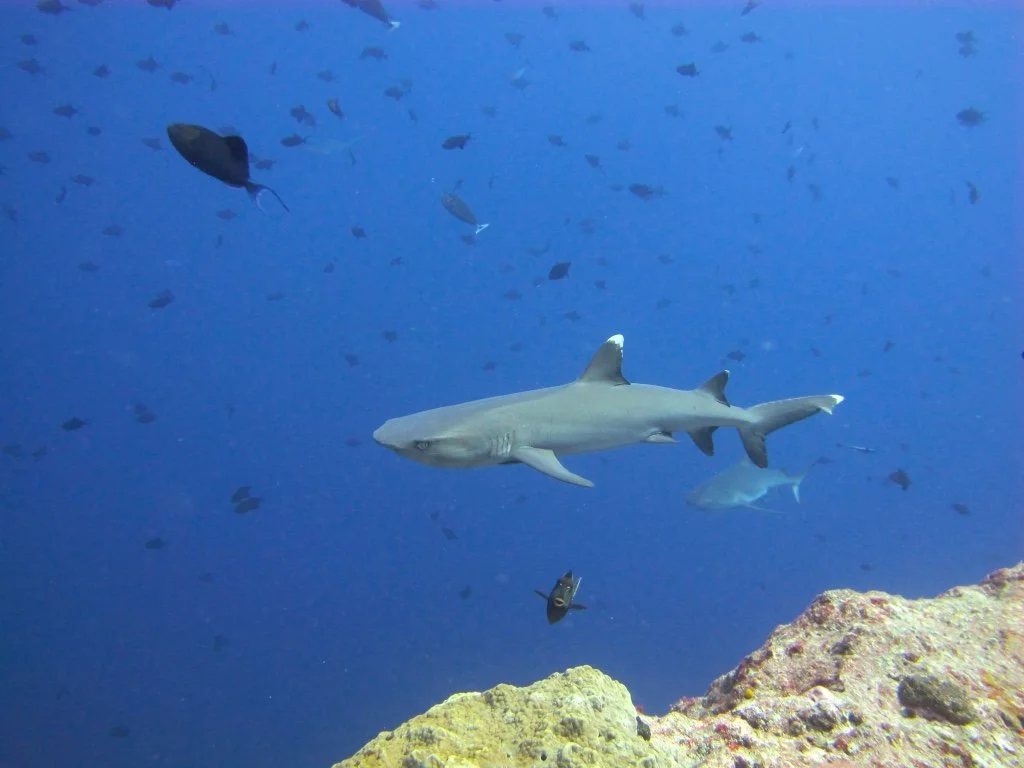
Sharks patrolling the reef drop off.
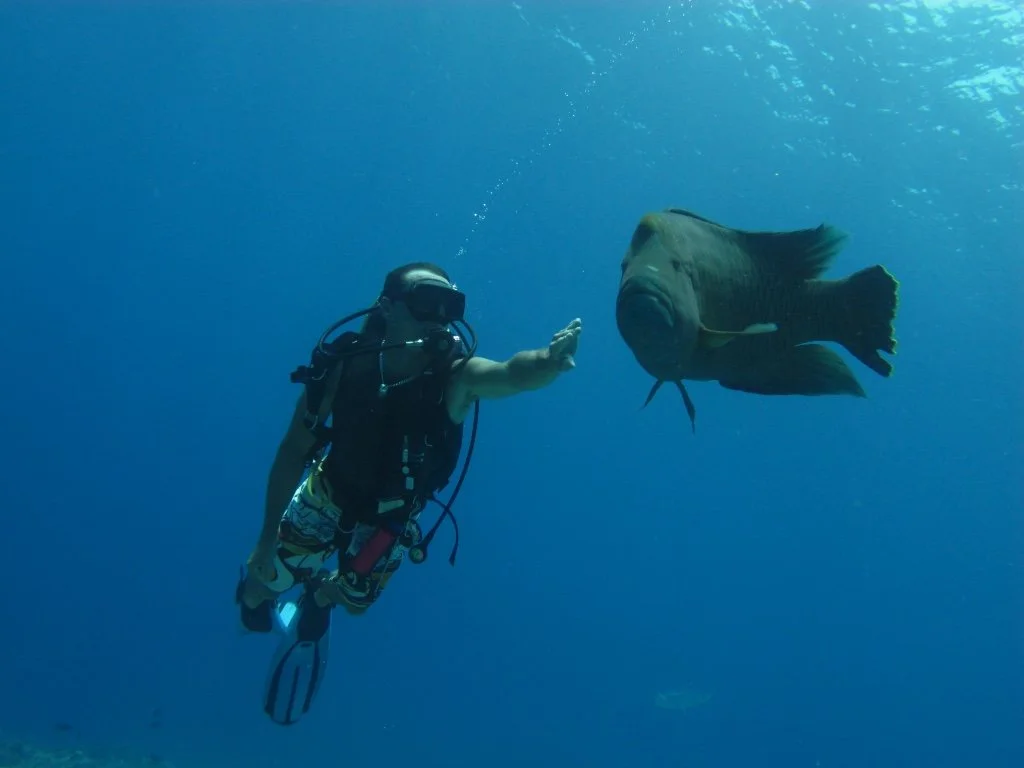
Napoleon Wrassed
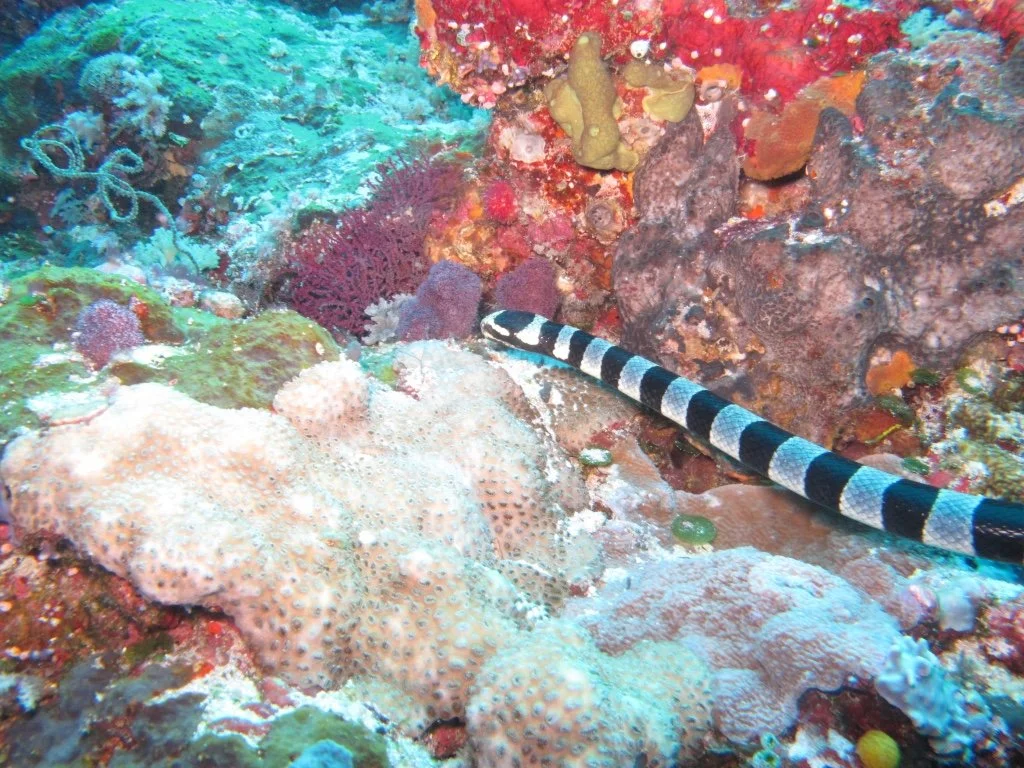
Banded Sea Snake hunting on Palau's reef
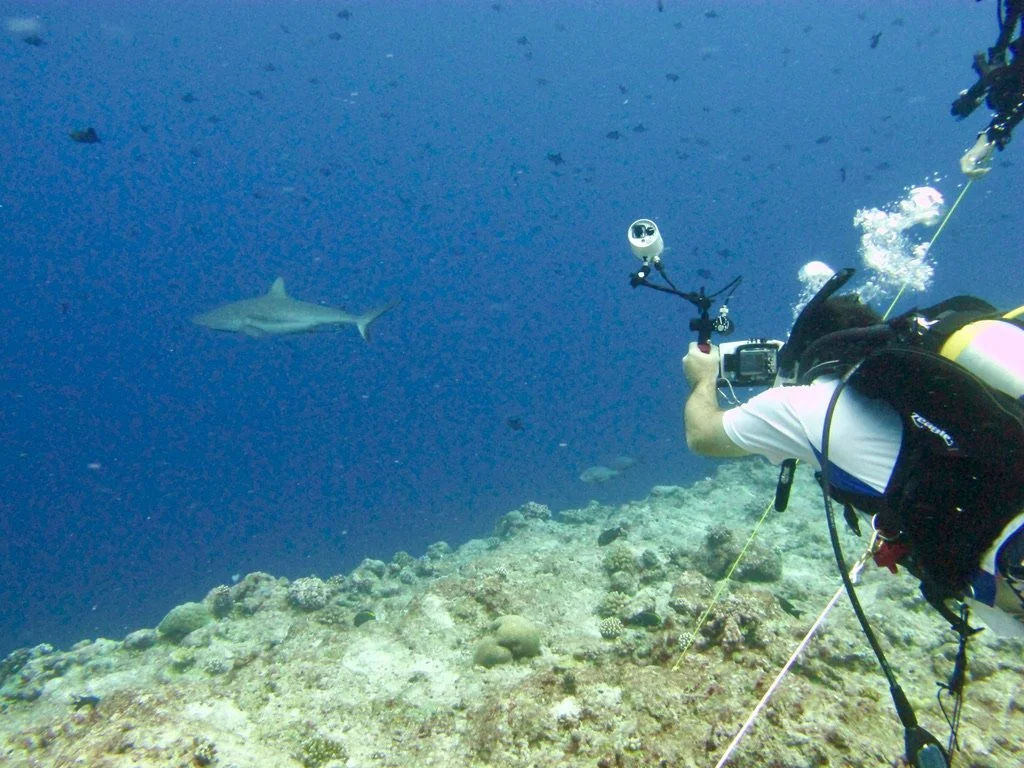
Divers hooked on Blue Corner
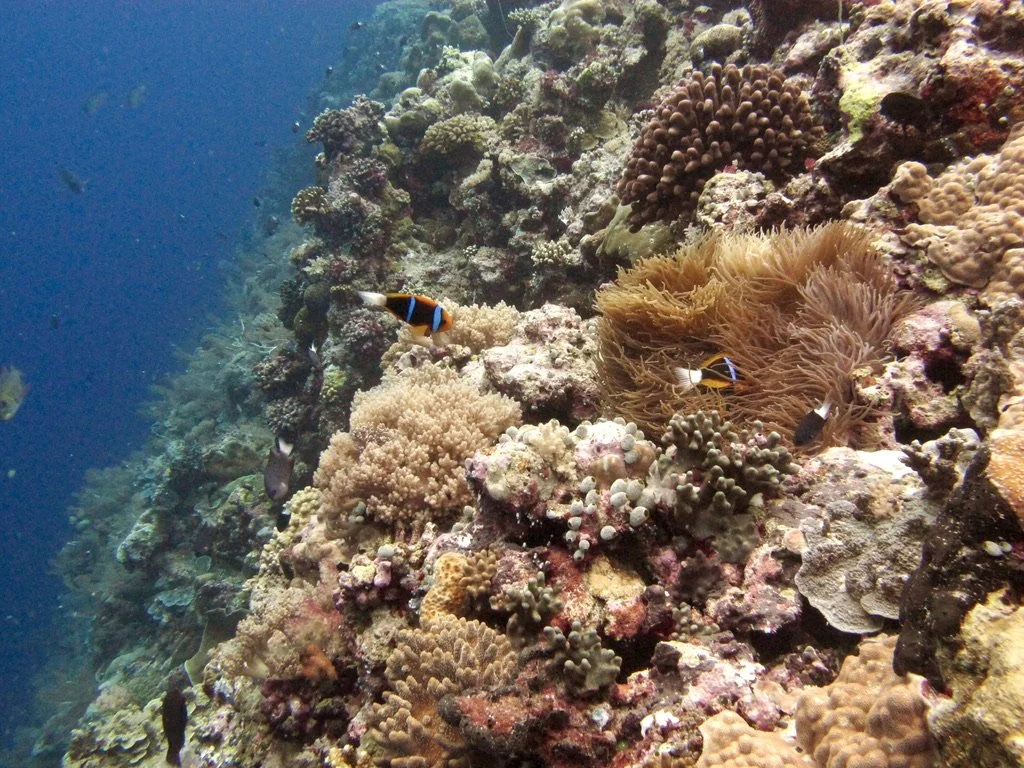
A large anemon
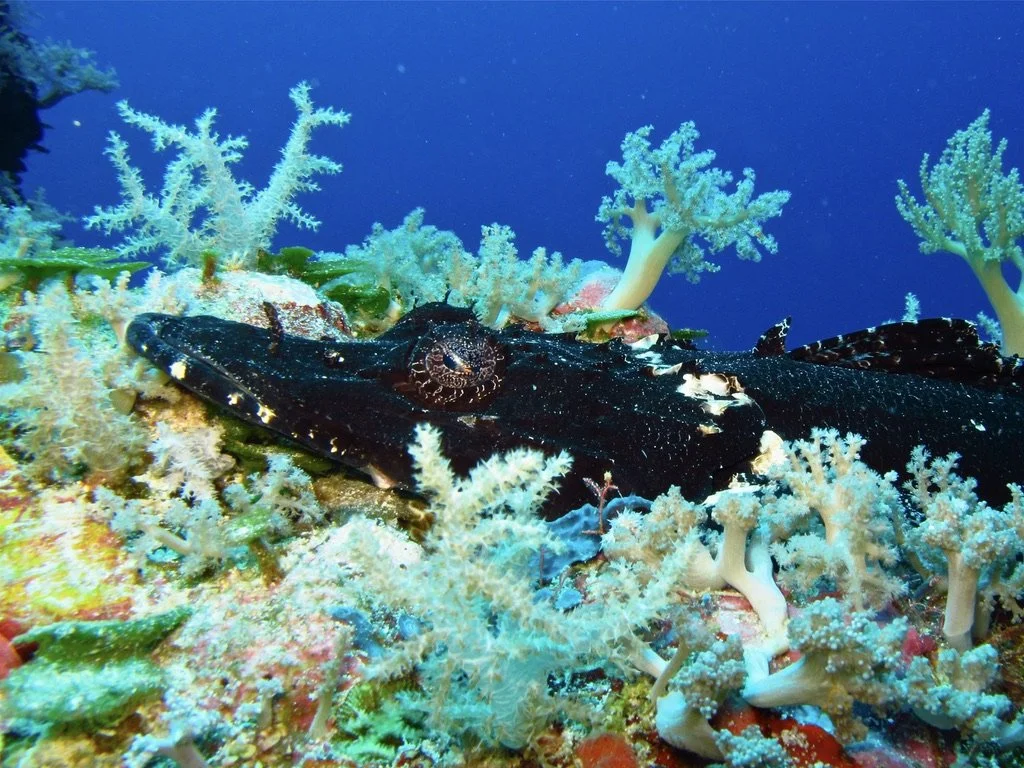
Crocodile Fish
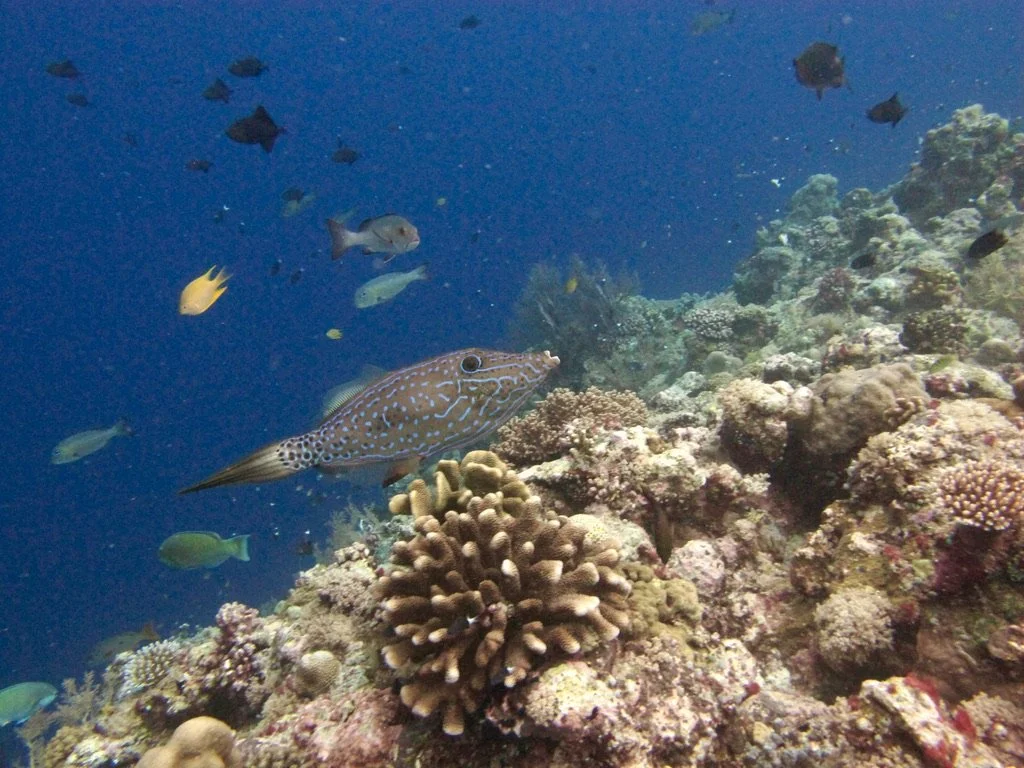
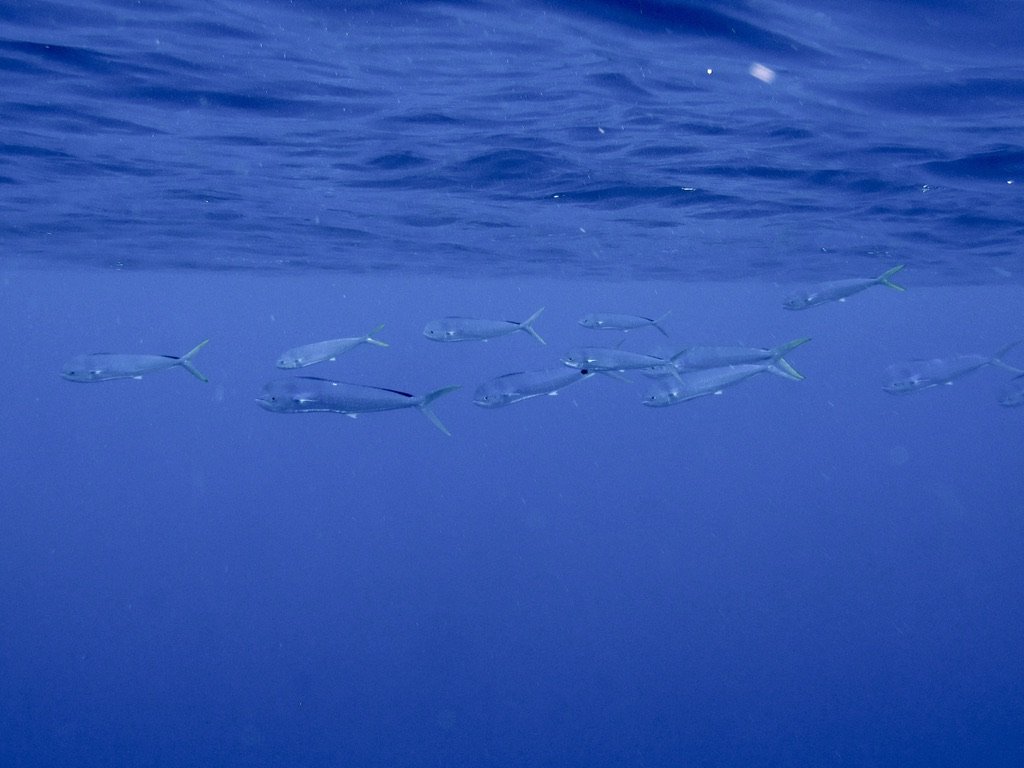
School of Mahi
Manta Swimming through German Channel
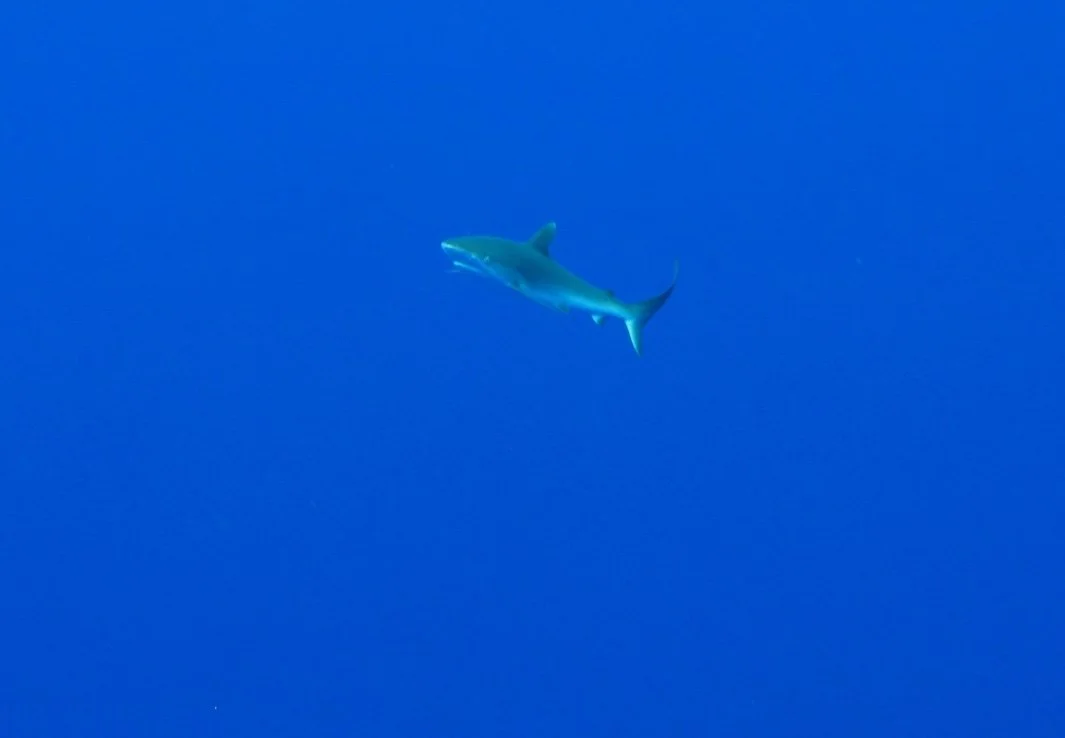
Silky Shark