
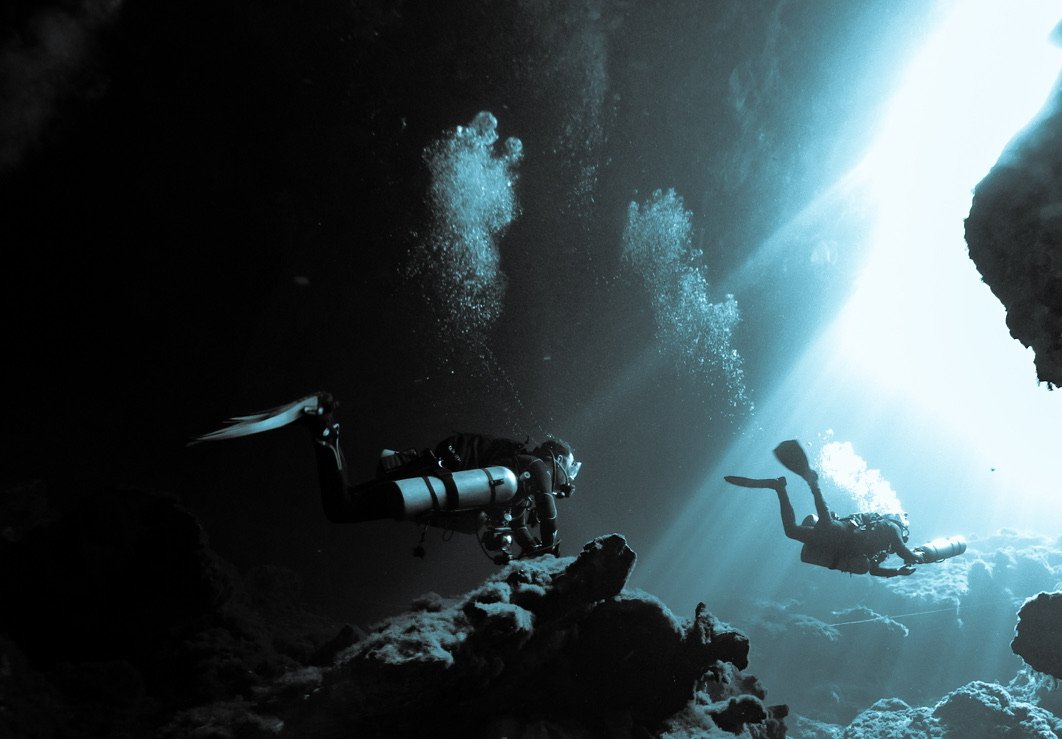
Cave Diving
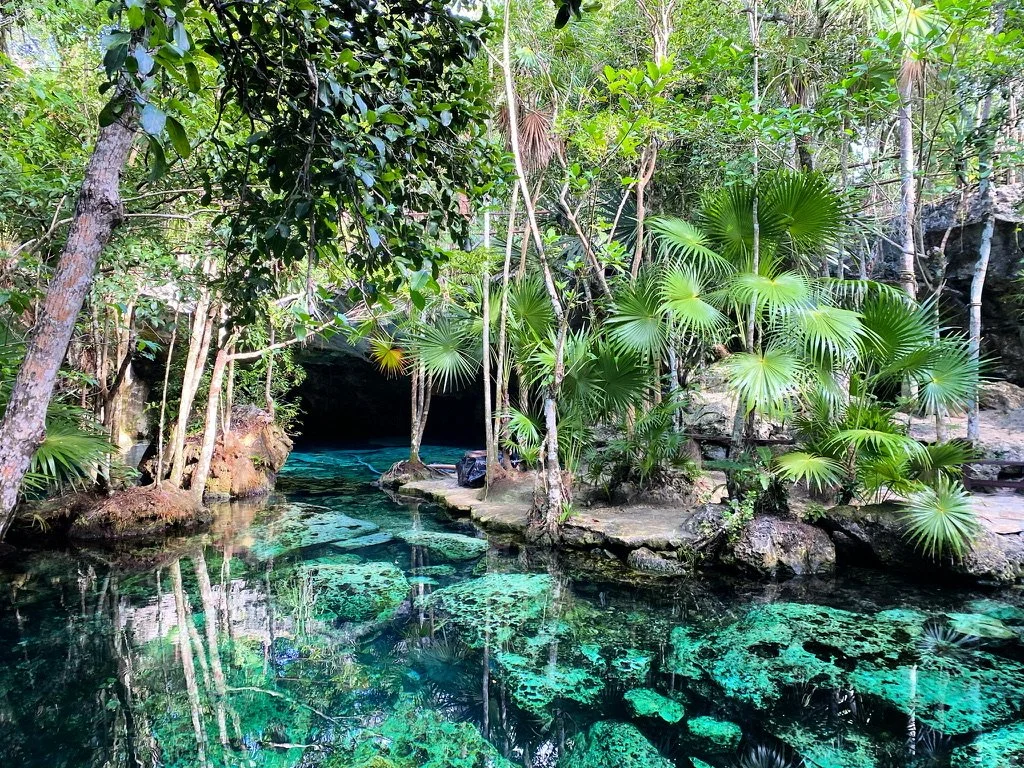
Cenote Minotauro
Why Cave Dive?
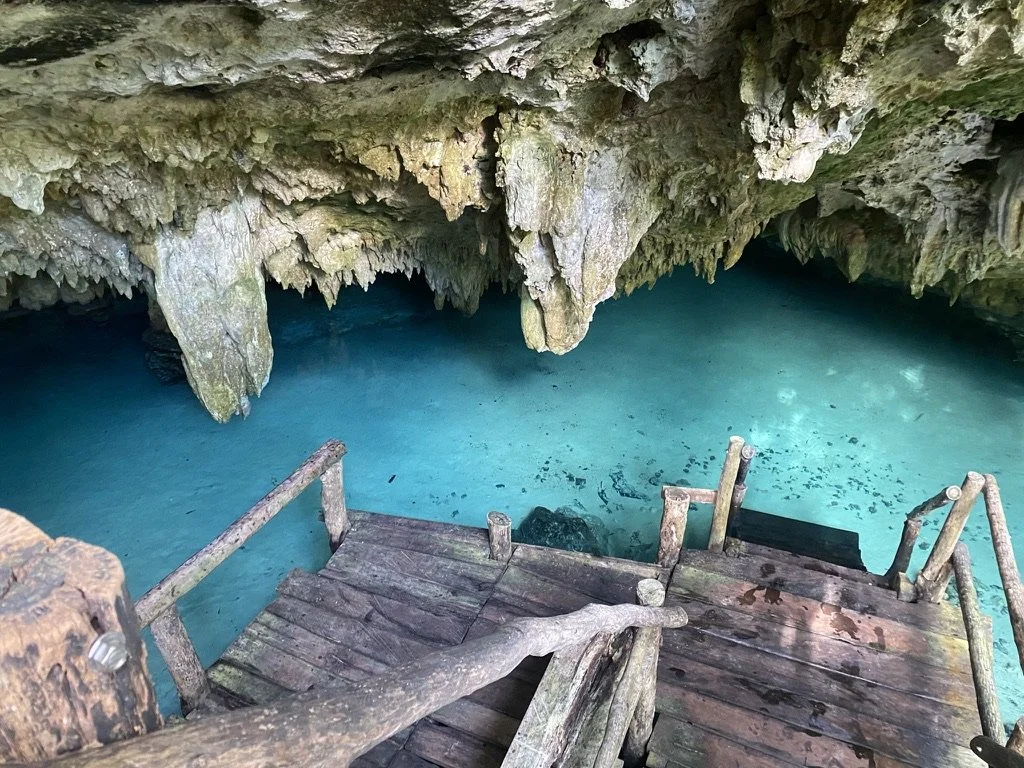
Cave diving is not nearly as scary as it sounds. Far from being an adrenaline inducing activity I find cave dives to be incredibly tranquil and meditative. Clear water, incredible cave formations and the low lighting make a cave dive feel like a swim through an underwater stone garden.
Entering an underwater cave truly feels like you are swimming into the Earth itself and entering some new strange realm. There are different rules around geometry and space, gravity and light. You are entering a place that has never seen daylight, that is devoid of almost all life, and that is tens of thousands or maybe even millions of years old and are spectacularly beautiful.
Most caves are formed when slightly acidic water dissolves its way through limestone bedrock. The water will naturally flow along weak spots in the stone; fault lines, fractures, and soluble rock. Over time the water flowing through these channels will slowly carve passages, tunnels, and pits.
Caves typically form as “dry caves” when the water table is low, allowing underground rivers to flow through the soluble rock or “Karst”. Cave formations are created when water drips through the ceiling of a cave and leave behind calcium deposits, forming a structure that looks like a stone icicle, directly below the stalactite will be a stalagmite. With enough time these two features can join to become a column or pillar. Sink holes, blue holes, and Cenotes all formed when the ceiling of a cave collapses on itself, creating an opening from the surface to the caves below. A dry cave finally becomes a cave dive when changes in sea level or the water table fully floods the underground tunnels and passages.
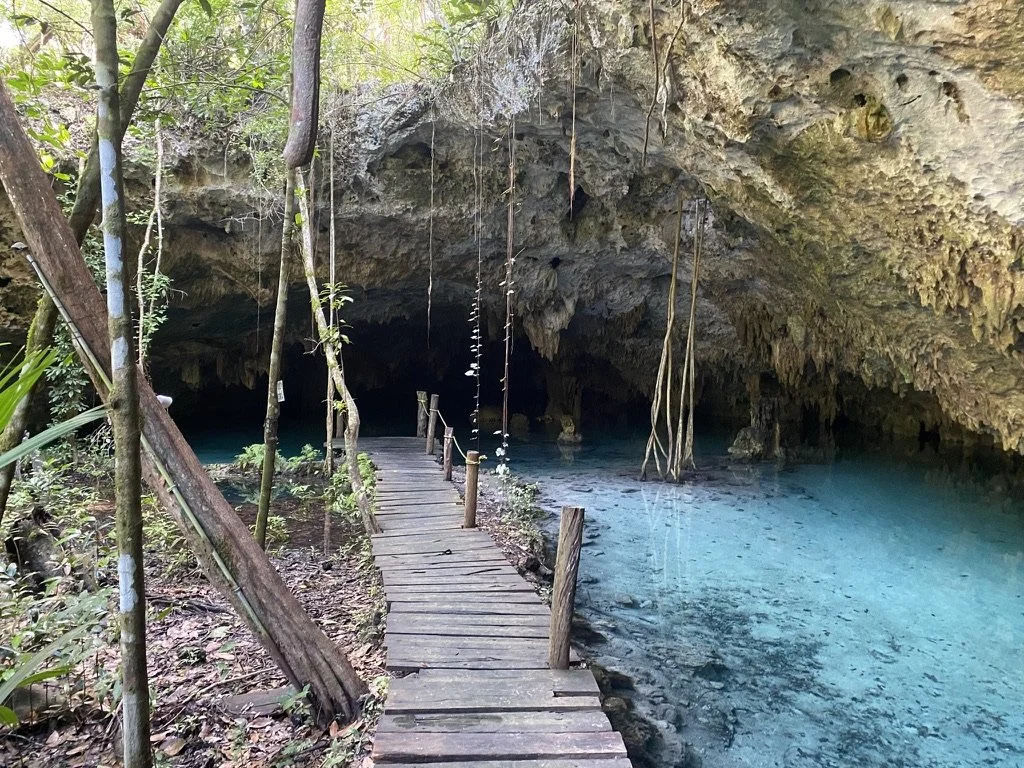
My favorite destination for cave diving, and the place where I completed most of my cave training is the Riviera Maya in Mexico. Located between Tulum and Playa Del Carmen the region has by far the best cave diving in the western hemisphere, and is perfectly setup for cave diving. The bedrock is primarily limestone, and unusually for a tropical region this size, has no surface rivers. The only surface water are the numerous cenotes; lakes formed from collapsed cave ceilings. All the water of the Yucatán flows through hundreds, (potentially thousands) of miles of underwater caves and caverns. The area is a swiss cheese of underwater passages and hundreds of miles of cave have been mapped, with more miles added each year.
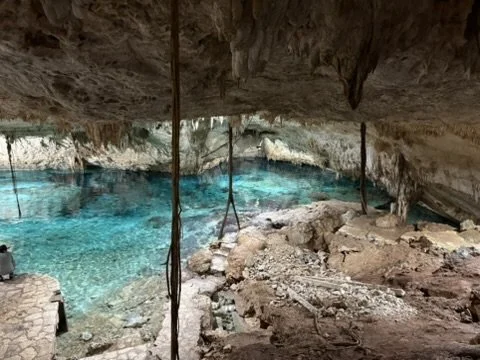
Cenote Taak Bi Ha
Cenote Yab-Yum
I was able to dive the Yab-Yum Cave for the first time in the summer of 2025, and by the end of the dive it was my personal favorite cave. The dive involved a 1,500 ft swim through highly decorated cave passages, before the tunnel finally opens up into a massive pit. The Yab-Yum pit is 300 ft in diameter and 150 ft deep. When you first enter the room it feel like swimming into a giant black void, as the pit is too large for even a cave light to shine across. However once our eyes adjusted and we began to explore the the walls and floor of the pit we were able to find stalagmites the size of houses, fossils from the last ice age, and a smoky chemocline clinging to a decaying leaf pile at the center of the pit.
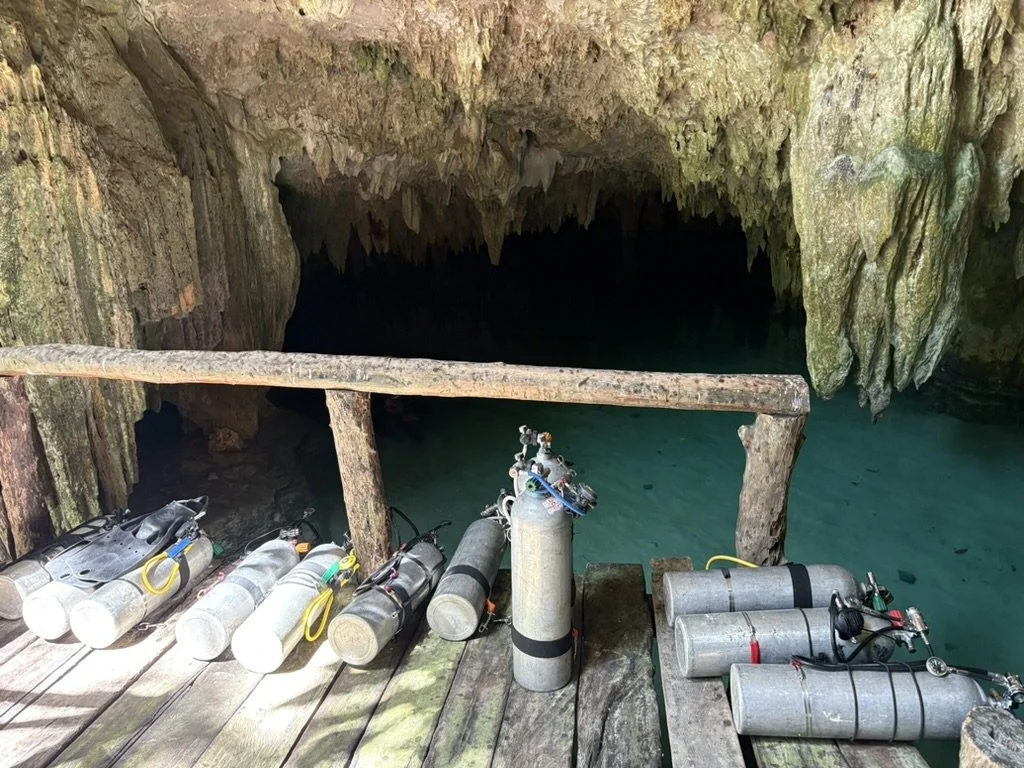
While the dive itself is spectacular, getting there is half the adventure. A four wheel drive vehicle is a must, and it took about 30 minutes to travel through barely cleared dirt paths to get to the cenote entrance. Gearing up is done in the jungle just outside the cenote entrance, which is hidden under dense foliage. It’s testament to the hard work and dedication of the local cave diving community that they were ever able to find this site.
The video below was my attempt to capture what the full Yab Yum dive is like. I started filming as soon as we descended and then sped up the playback speed 8x to turn a 30 minute swim through Yab Yum passages into a continuous 4 minute clip. At the 4 minute mark we reach the Yab-Yum pit, and the rest of the video is our team’s exploration of the massive chamber.
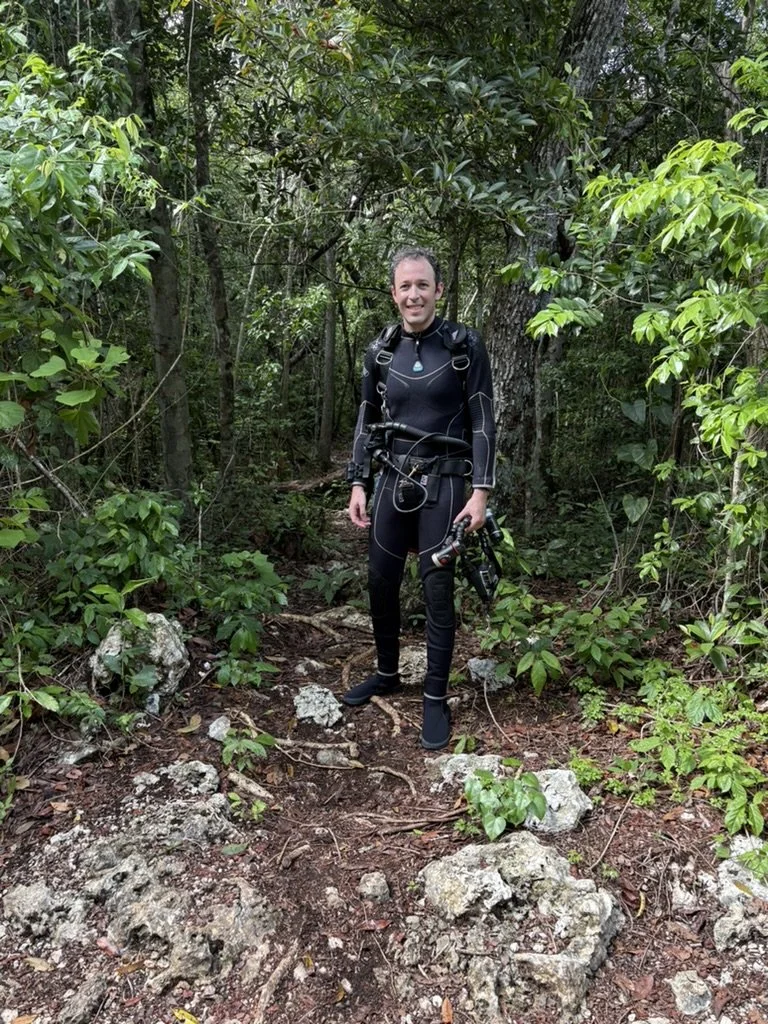
Gearing up in the jungle for Yab-Yum
Sistema Sac Actun
Cave naming conventions in Mexico follow a set of rules. The first person to discover a new cave gets to name it. As the system is explored and grows, all the new passages are considered part of the same cave. When the exploration continues and a connection is found between two cave systems they are merged into one cave system, and the name of the entire system is changed to whichever of the two systems was bigger at the time of connection. When I first started Cave diving in Mexico it was mostly in the Dos Ojos system, in 2018 Robbie Schmittner found a connection between Dos Ojos and Sac Actun, and the whole system became Sac Actun. At 235 miles long and with over 200 cenotes Sac Actun was the largest cave system in the world until 2023 when another connection made the nearby Ox Bel Ha system larger. Eventually they will probably connect the two systems and Sac Actun might become Ox Bel Ha.
But for now Sac Actun is the system I have dived the most. It includes some iconic dive sites including Dos Ojos, The Pit, and the Blue Abyss. Many of these sites are easily dived by Open water or cavern divers, all of them are connected. One of the more technical dives I did involved using DPVs, 4 tanks a person, and 3.5 hours to traverse 4km of underwater from Cenote Taak Bi Ha to the Pit and back.
Below are clips from some of my Sac Actun dives over the year, including two of the deepest caves in the area, The Blue Abyss, and the Pit.
Cenote Pet Cemetery
Cenote Tajma Ha
Tajma ha is another fun cave dive. This system is south of Playa Del Carmen, and has some beautiful passage, most notably the Chinese Garden Tunnel. One of the parts that I found most fun was that several passages have a halocline running through them. Haloclines are formed in caves near the sea, where the freshwater layer sits on top of the denser salt water layer. The boundry between the two layers is clearly visible and creates an effect that looks like an underwater lake. The Halocline is clearly visible at the 1:10 second mark. This is also a great sidemount cave with few fun restrictions that require taking tanks off and passing them through some very tiny openings.
Florida Caves
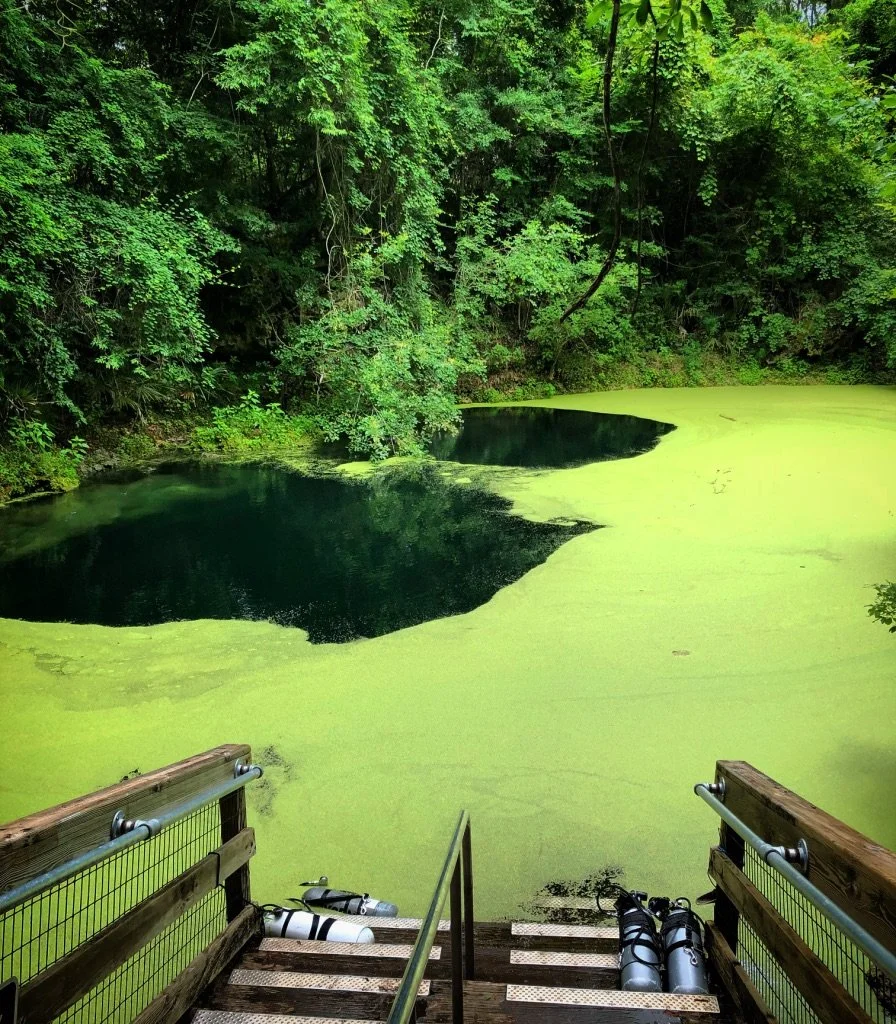
It might not look inviting but there is a beautiful cave down there.
North and central Florida is cave country. There are dozens of cave systems, and some excellent cave dives. My first ever true cave dive was in Florida, at Ginnie Springs. The Florida caves have a very different feel than the Mexico ones, both have crystal clear water, but Florida temperatures are slightly colder,mostly low 70s. The caves are also deeper mostly in the 70-120 ft range. They also have very few stalactites and stalagmites, and are typically comprised of winding tunnels. Also Mexico caves require schlepping your gear through the jungle. Florida Caves require schlepping the same gear through a swamp.
The other big difference is flow. Florida Caves tend to be high flow springs. Swimming into a Florida cave like Ginnie requires swimming against what feels like a fire hose of water being shot out of the aquifer at you. Obviously this makes swimming into a Florida cave very tiring. On the flip side, exiting a high flow cave requires just a little bit of steering as the current shoots you through tunnels and back out the exit.
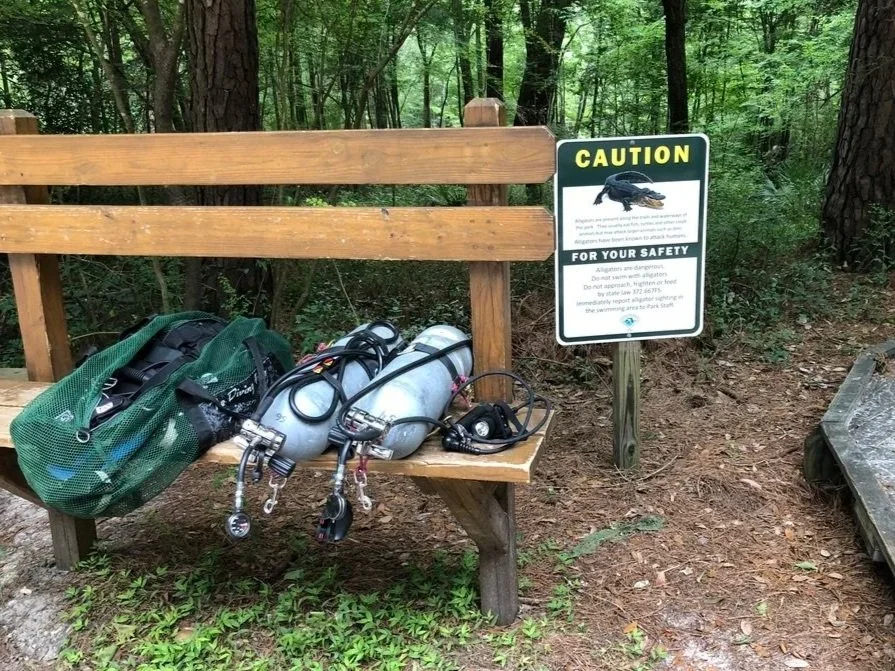
Watch out for Gators
How to Get Started Cave Diving
If you think you might be interested in cave diving my recommendation would be to sign up for a Cavern class. It’s a great class to take regardless of if you want to go any further with cave diving. To be a successful cave diver you need to be able to swim into and out of cave without kicking up the bottom silt, getting tangled in the line, or crashing into the ceiling. Most of a cavern class will be spent practicing buoyancy, equipment trim, and finning techniques; all great skills whether or not you intend to keep cave diving.
The first few cavern dives are spent in the light zone of the cave (the areas where the exit is clearly visible and less than 130 ft away) and its a good chance to learn the basics of cave diving, like doing basic line and reel drills. You can do this class with recreational dive gear.
After Cavern the next step is to start doing Intro to Cave, and then start with the full cave progression. The classes and skills build on each other, and the class is a lot of fun, and will make you a much stronger diver. After getting your buoyancy and trim set, the next step is problem solving, and making sure you are comfortable handling and fixing problems underwater. You will do drills dealing with lost lines, out of air drills, and a variety equipment failures. The course also deals with cave navigation and gas management which become much more critical as you start swimming deeper into the caves.
This is also the point where equipment considerations start to come into play.
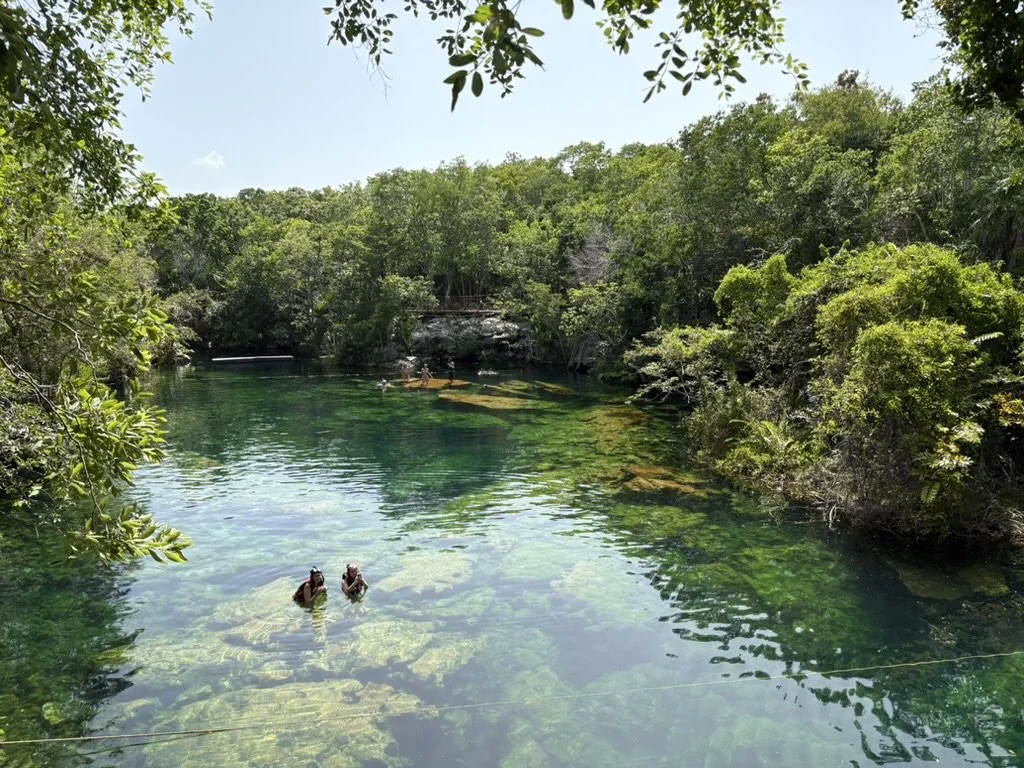
Cenote Ponderosa, a great training cave
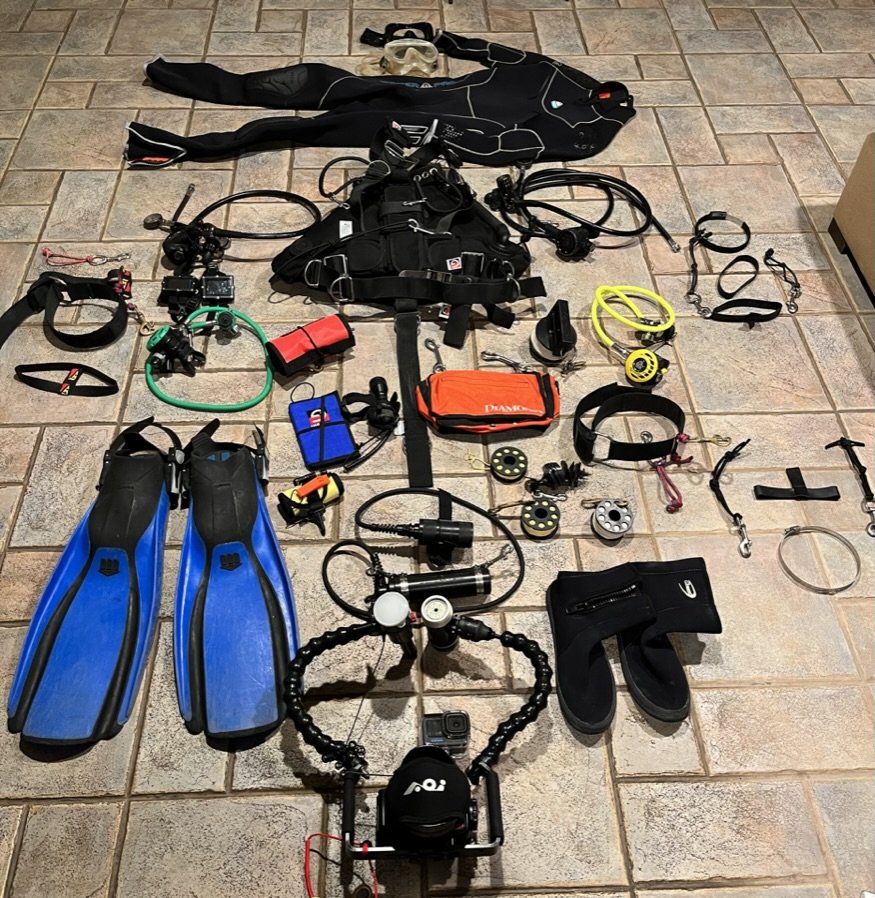
The Gear:
Scuba diving is an equipment intensive sport at baseline. Cave diving takes it to a whole new level. In order to be able to safely travel into a cave you will need lots of gas, and lots of redundancy. On some cave dives you can be an hour swim to the nearest exit. In order to do that safely you will need back up gear, and back up gas. My personal record is 4 Aluminum 80’s on one dive. You will need reels, spools, cave markers, a primary light, and at least three dive lights, rigging and regulators for all the extra tanks, a redundant dive computer or dive watch, and BCD capable of carrying all of this stuff.
A single tank setup is fine for a Cavern class , but at some point you are going to need to move to double tanks. At this point you will have to decide …Backmount or Sidemount?
This is largely a question of preference. I decided I wanted to learn Sidemount diving when I started cave diving, and have done all of my cave training, and cave dives in a sidemount setup. I personally love it, it’s a very flexible and adaptable setup. Keeping the tanks on the sides are very useful for a lot of caves that are often wide, but flat. It’s easy to unclip one or both tanks when moving through tight restrictions that a back mount diver might not be able to get through. I also personally find it comforting to be able to look down on either side and see the tank valves and regulators, where I can easily do bubble checks, and also not worry about anything getting snagged on my back.
The other place where sidemount is great is the logistics of cave diving. A lot of caves are not easy to get to, they will require walks through jungles or swamps, down stairs, over rocks and uneven surfaces, all in tropical environments. Doing that fully geared up in back mount doubles is a lot of work. Sidemount allows you to take your gear to the dive site entrance one tank at a time, and then gear up in the water.
The drawbacks to sidemount is that it will take you several dives to get used to the setup. The first dive or two you will feel like a tangled mess of bungee cords and bolt snaps. It’s also hard to manage more than 4 tanks on sidemount. However if you plan on diving 5 or more tanks you might as well do yourself a favor and just get a rebreather.
If you have a lot of experience with backmount, and are already fully setup for technical backmount, then starting cave training that way is probably your best bet. You’ll be able to jump right into the cave training without having to learn new diving techniques, and you won’t have to invest that much into new equipment.
My current cave diving setup.