
Shipwrecks of New York
*And New Jersey
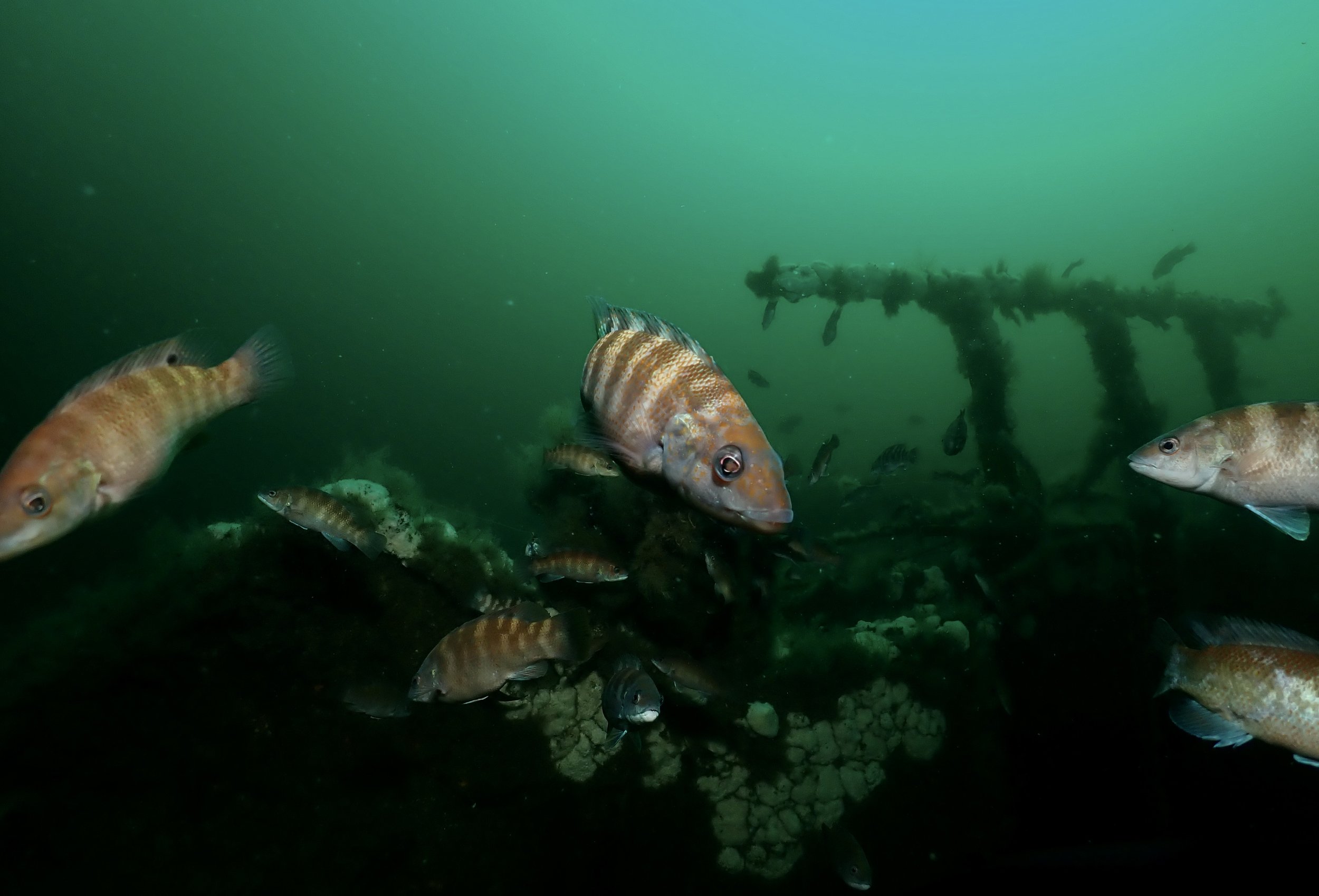
New York Harbor has been the busiest port on the East Coast for hundreds of years. Not surprisingly, this means our region has one of the highest concentrations of shipwrecks anywhere in the world. Centuries of unpredictable storms and fog, navigational errors, accidents, and two world wars have littered our waters with wrecks—each with its own unique story and tragedy. Just off our coast lie hundreds, if not thousands, of freighters, tankers, fishing vessels, passenger liners, U-boats, warships, sailing ships, and barges. Each wreck has become a time capsule of the moment it sank, as well as a thriving habitat for local marine life. Today, many of these sites make for incredible dive destinations, and this page is dedicated to sharing photos and videos that showcase what some of these shipwrecks look like today. This is not meant to be a dive guide, but I have included links to dive guides for all the sites listed.
USS San Diego - ACR-6
The USS San Diego was an armored cruiser that entered service in 1907. After the United States entered World War I, German U-boats began operating off the East Coast, and the San Diego was assigned to protect convoys of ships heading to Europe from this new threat. In July 1918, she was sunk off the coast of Fire Island by an external explosion—likely from a mine or torpedo. The ship went down quickly with the loss of six crew members and now rests upside down in 105 feet of water. Today, it is considered one of Long Island’s best wreck dives, and at 503 ft long and 14,000 tons is the largest. Although inverted, the ship’s 6-inch and 3-inch guns can still be seen protruding from their gun ports, and the hull rises to within about 70 feet of the surface. After more than a century underwater, large sections of the wreck are beginning to collapse, revealing new areas for exploration.
https://en.wikipedia.org/wiki/USS_California_(ACR-6)
https://njscuba.net/dive-sites/new-york-dive-sites/long-island-west-chart/uss-san-diego/
S.S. Grecian
The Grecian was a small coastal freighter that sank after colliding with another vessel in 1932 off of Montauk. The wreckage is very broken up and scattered at a depth of 95 ft, with the bow, engine, and boilers as the most prominent features. It’s also a really pretty wreck, the ship is on a light sandy bottom, and the day I went visibility was excellent. Anemones, hydroids and nudibranch covered much of the wreckage.
https://njscuba.net/dive-sites/new-york-dive-sites/long-island-east-chart/grecian/
The Ayuruoca, aka Oil Wreck, is a WWII era freighter that sank in 1945 while transporting a cargo of large army trucks and other war goods. While sailing in heavy fog the ship collided with another vessel and was cut in half. Both sections came to rest upright at a depth of 170 ft in the mud hole.
If I had to choose three words to describe the wreck they would be "deep, dark, and spooky". The mud hole is a submarine trench carved by the outflow of the Hudson River. By the time I reached the wreck the visibility dropped to a very dark and very silty 10-15 ft. However the wreck itself was impressive and in remarkably good shape all things considered.
We tied into the stern of the ship. The deck of the ship is in about 145-150 ft of water, and the stern gun, and at least two of the trucks are still visible. Conditions weren't ideal for video, so this isn't my best effort, but I think I was able to capture the vibe.
https://njscuba.net/dive-sites/new-jersey-dive-sites/manasquan-chart/ayuruoca/
Ayuruoca “Oil Wreck”
Wreck of the Delaware
The Delaware was a wooden hull steamliner built in 1880. She sunk due to an ship board fire in 1898, with miraculously no casualties. The wreck is in 75 ft of water just off shore of New Jersey. This is an inshore wreck, so visibility tends to be on the murky side, but there is still a lot to see. The engine is intact, as are the ship’s boilers. It is possible to follow the ships propeller shaft back to the stern where the propeller can be found half buried in the sand. The broken down wooden timbers of the hull can be found along the edges of the wreck.
https://njscuba.net/dive-sites/new-jersey-dive-sites/manasquan-chart/delaware/
USS Algol
The USS Algol is a bit different from most of our local wrecks in the sense that she was sunk intentionally, as part of the New Jersey Artificial Reef Program. The ship was a US Military attack transport that served in WWII and the Korean War, before being decommissioned in the 70’s. She was a large ship, 459’ long, and is one of the largest, and most intact wrecks in the area. She was intentionally sunk in 1991 in 140 ft of water, but this wreck is so large the top can be reached at a depth of about 70 ft. Visibility on the wreck is typically very good, and the intact hull has lots of place to poke around and explore.
https://njscuba.net/artificial-reefs/new-jersey-reefs/shark-river-reef/uss-algol-aka-54/